Folder 01 · 7 pages
San Fernando Valley Tap Water
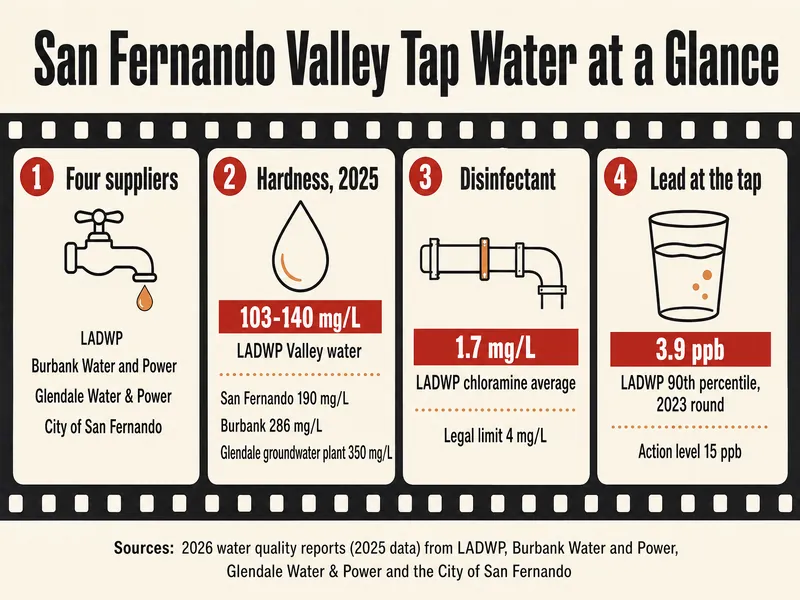
San Fernando Valley tap water comes from four suppliers, and in 2025 their water ranged from moderately hard LADWP water to very hard Burbank and Glendale water, with chloramine as the usual disinfectant.
Before you scroll
- Four suppliers serve the Valley: LADWP for the LA City neighborhoods, plus the city-run utilities of Burbank, Glendale and San Fernando.
- LADWP's Valley water averaged about 103-140 mg/L of hardness (6-8 gpg) in 2025, depending on the source, per its 2025 Drinking Water Quality Report.
- Burbank's blended water averaged 286 mg/L (16.7 gpg) in 2025, very hard on the USGS scale.
- LADWP's total chlorine residual averaged 1.7 mg/L in 2025, under the limit of 4 mg/L.
- California's chromium-6 limit is 10 µg/L; LADWP's Valley sources measured under 0.1 µg/L in 2025.
- In the 2023 lead round, LADWP's 90th percentile tap result was 3.9 ppb against a 15 ppb action level.
This folder collects what the four Valley water suppliers publish about the water that reaches your kitchen tap. Every figure comes from the 2026 editions of their yearly reports, which cover calendar 2025, or from state and federal rules. Reports print amounts in ppm (mg/L), ppb (µg/L) and ppt (ng/L); this site uses the same units.
Who supplies San Fernando Valley tap water?
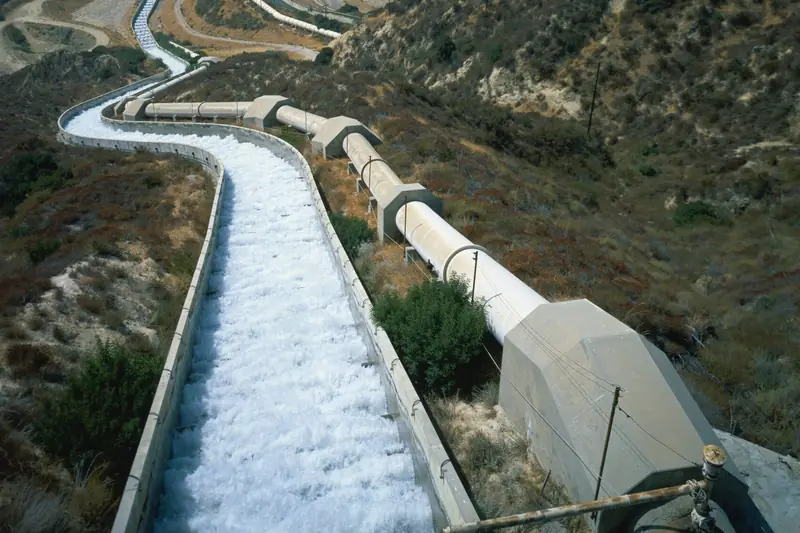
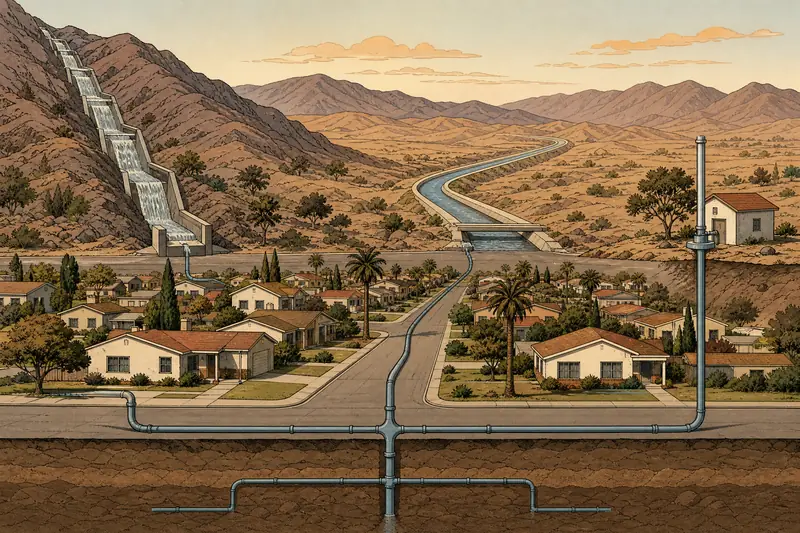
San Fernando Valley tap water comes from the Los Angeles Department of Water and Power in LA City neighborhoods and from three city-run systems elsewhere. LADWP's 2025 report lists 30 "San Fernando Valley Communities", from Arleta and Canoga Park to Woodland Hills, served by the Los Angeles Aqueduct, local groundwater and MWD State Water Project water. Burbank Water and Power serves Burbank, Glendale Water & Power serves almost all of Glendale, and the City of San Fernando pumps its own wells from the Sylmar Basin.
In 2025, LADWP's city-wide mix was 44% Los Angeles Aqueduct, 52% imported water bought from the Metropolitan Water District (MWD), 3% recycled water and 1% local groundwater. If you live in Calabasas, Hidden Hills or an unincorporated pocket, your supplier is someone else: read that supplier's report rather than these figures.
How hard is Valley tap water by supplier?
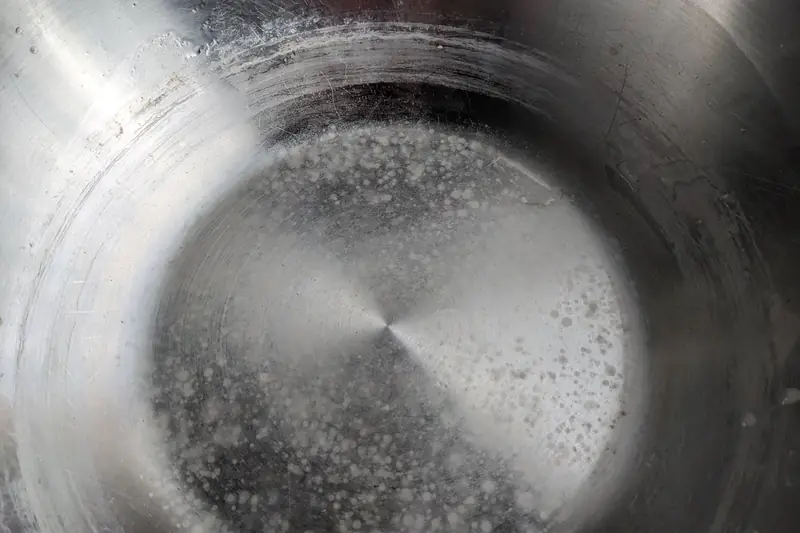
The tap water's hardness depends almost entirely on which supplier you have. LADWP's Valley sources averaged 103 mg/L (LA Aqueduct Filtration Plant), 115 mg/L (Northern Combined Wells) and 140 mg/L (MWD Jensen water) in 2025: moderately hard to hard on the USGS scale. Burbank Water and Power's 2025 water quality report (2025 data, published June 2026) prints 286 mg/L, or 16.7 gpg.
Glendale prints no city-wide figure. Its groundwater treatment plant measured 350 mg/L (about 20.5 gpg) and the MWD Weymouth water it buys averaged 234 mg/L. San Fernando's own wells came in at 190 mg/L, close to 11.1 gpg. On the USGS scale, anything over 180 mg/L counts as very hard.
What is in the water besides hardness?
Besides minerals, the main things Valley readers ask about are the disinfectant, chromium-6 and PFAS. LADWP, Burbank and Glendale use chloramine (Glendale also uses chlorine), San Fernando switches to it when it buys MWD water, and LADWP's total chlorine residual averaged 1.7 mg/L in 2025 against a limit of 4 mg/L. People on home dialysis and anyone keeping fish must remove it, per LADWP's report.
California's chromium-6 limit of 10 µg/L took effect on October 1, 2024, according to the State Water Resources Control Board. In 2025, Burbank averaged 4.5 ppb, Glendale's groundwater plant 5.1 ppb before blending, San Fernando 3.4 ppb, and LADWP's Valley sources under 0.1 µg/L. The legacy of the Valley's groundwater cleanup sites explains most of these differences.
Is there lead in Valley tap water?
LADWP says it found no lead service lines anywhere in its system, including the customer-owned pipe, when it finished its inventory in October 2024. Its water quality page also reports a non-lead designation from the State Water Board. Lead that shows up at a tap usually comes from home plumbing such as old solder or brass fixtures.
In the 2023 sampling round, LADWP's 90th percentile was 3.9 ppb, with 3 of 105 homes above the 15 ppb action level. Burbank (55 homes) and Glendale (51 homes) reported non-detect 90th percentiles, and San Fernando 2.3 ppb from 30 sites. EPA's new rule lowers the action level to 10 µg/L from November 1, 2027.
How do you read your supplier's report?
Start with the table column that matches your area, then compare each average with its MCL, the enforceable limit. LADWP's report explains that the LA Aqueduct Filtration Plant, Northern Combined Wells and MWD Jensen columns apply to the Valley. Burbank prints one blended column; Glendale prints separate columns for its plant and two MWD sources.
San Fernando Valley tap water, 2025
- 103-140 mg/LLADWP Valley water hardness, by sourceLADWP Drinking Water Quality Report 2025
- 286 mg/LBurbank blended water hardness, printed as 16.7 gpgBurbank's water report for 2025
- 44%Share of LADWP water from the LA AqueductLADWP Drinking Water Quality Report 2025
- 10 µg/LCalifornia chromium-6 limit, effective October 1, 2024State Water Resources Control Board
| Supplier | Hardness | Chloramine residual | Chromium-6 | Lead, 90th percentile |
|---|---|---|---|---|
| LADWP (Valley sources) | 103-140 mg/L | 1.7 mg/L city-wide | under 0.1 µg/L | 3.9 ppb |
| Burbank Water and Power | 286 mg/L | 2.1 ppm | 4.5 ppb | ND |
| Glendale Water & Power | 140-350 mg/L by source | 1.25 ppm | 5.1 ppb (plant, before blending) | ND |
| City of San Fernando | 190 mg/L | chlorine; chloramine when buying MWD water | 3.4 ppb | 2.3 ppb |
Where this page comes from
This folder page draws on the 2026 editions of the yearly water quality reports issued by LADWP, BWP, GWP and San Fernando, all on calendar 2025 data, plus the USGS hardness scale, the State Water Resources Control Board's chromium-6 page and EPA's Lead and Copper Rule Improvements, all read in October 2026. It leaves out suppliers outside these four systems, grades or rankings of any utility, and health claims about hardness.
Still asking
Which supplier serves my street in the Valley?
Your water bill names it. If you live in Van Nuys, Sherman Oaks, Northridge, Sylmar or another LA City neighborhood, it is LADWP; Burbank, Glendale and the City of San Fernando run their own systems.
Does the whole Valley get the same tap water?
No. LADWP blends Los Angeles Aqueduct water, MWD water and some well water, while Glendale's 2025 water was 31.3% local groundwater and San Fernando pumps almost all of its own. That is why hardness ranges from about 103 to 350 mg/L across the Valley.
Where do I find the newest water quality report?
Each supplier posts it on its own website. The 2026 editions, covering 2025, came out in June and July 2026 and are the newest as of October 2026.
Is Valley tap water fluoridated?
LADWP adjusts fluoride to 0.7 ppm, and its 2025 treated water ranged from 0.2 to 0.8 ppm. Burbank and Glendale report distribution averages near 0.5-0.7 ppm.
Why does Burbank's water test harder than LADWP's?
Burbank blends MWD water with treated groundwater from the Burbank Operable Unit, and that blend averaged 286 mg/L in 2025. LADWP's Valley water leans on softer Los Angeles Aqueduct water.
Does Valley tap water contain PFAS?
LADWP says no PFAS regulated by California or EPA was found at entry points to its system. Burbank's 2025 report shows PFOA and PFOS as non-detect, with three unregulated PFAS at low ppt levels.
Who should I ask about a problem at my own tap?
Ask your supplier's water quality office first; LADWP suggests testing at the front hose bib to tell a supply problem from a house plumbing one. For problems inside the house, a licensed plumber (C-36) is the usual next step.
That is the end of this page. Back to the Shutoff Valley front page.