Find the Main Water Shutoff in a Valley Home
In a San Fernando Valley home, the main water shutoff is the house valve on the supply line near where it enters the building, not the curb valve in LADWP's meter box, and it is worth finding, tagging and test-closing before the next quake.
Call sheet: what this page covers
Before you scroll
- Past the meter, the pipes belong to the homeowner, according to LADWP's water service guide.
- The curb valve sits on the inlet side of the meter box so LADWP crews can shut the line to repair or replace the meter (LADWP Design Standards, 2025, p.42).
- Ready.gov warns that the street valve "is extremely difficult to turn and requires a special tool"; close the house valve instead.
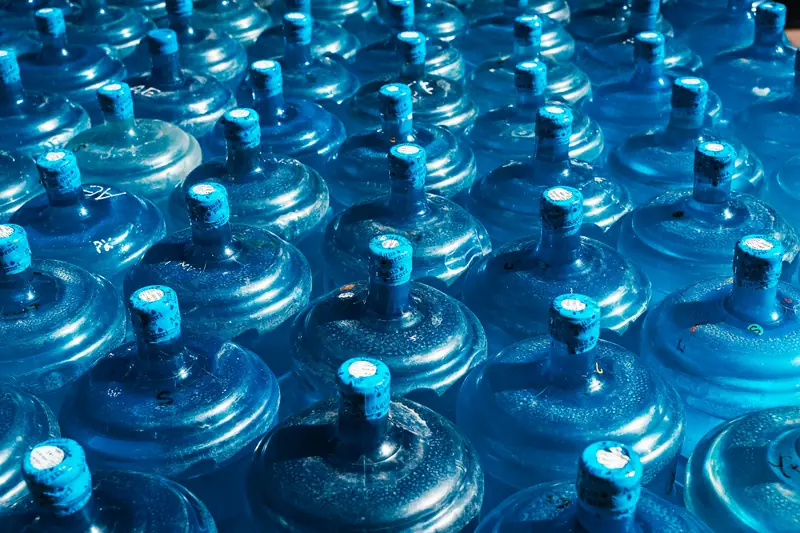
- A restrained, undamaged water heater holds about 40 gallons you can use, according to FEMA P-530 (2020), and closing the main keeps it from draining back.
- LADWP's service rules set a floor of 25 psi where its pipe meets yours, so the line to your house is under steady pressure until the house valve closes.
- Los Angeles lists replacing a shut-off valve among plumbing jobs that need no permit (LAMC 94.103.1.2).
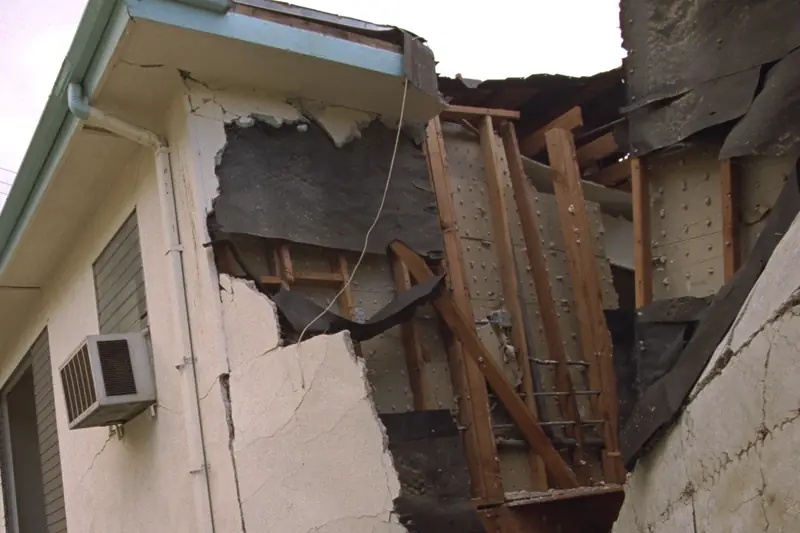
A broken pipe after an earthquake can empty a water heater, flood a slab and pull dirty water back into the house lines. One valve stops all three, and most owners have never closed it. This page walks through finding it, testing it and turning water back on.
Where is the main water shutoff on a Valley home?
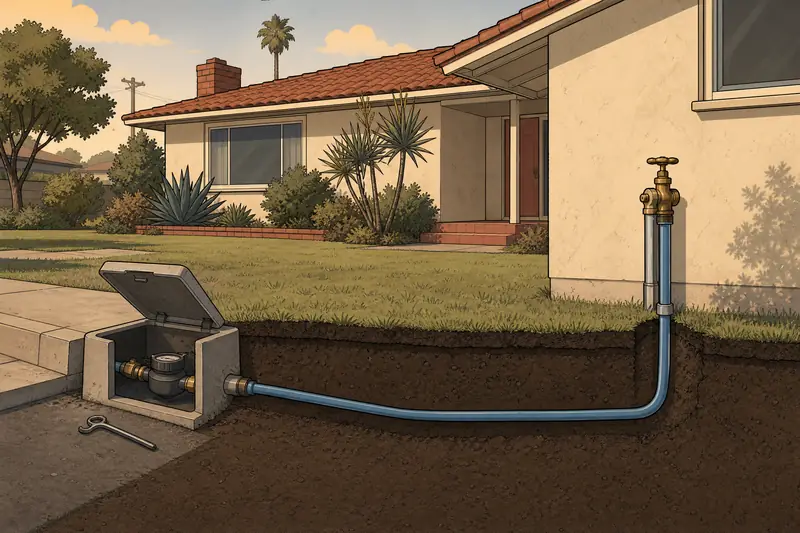
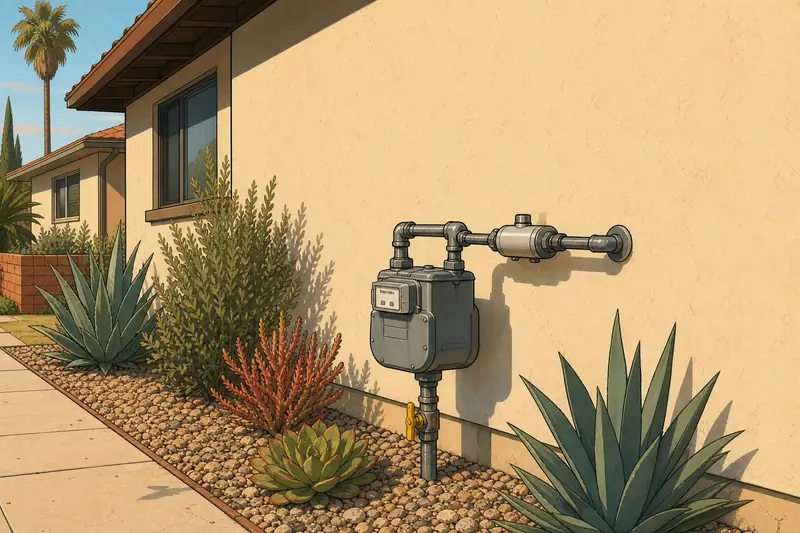
The main water shutoff is usually a brass gate valve (round wheel handle) or ball valve (lever handle) on the supply pipe where it comes up out of the ground beside the front or side wall, often near a hose bibb. On many Valley ranch houses on slabs, that riser is the last place the line is visible before it disappears under the floor.
If it is not at the wall, follow the line from the meter box toward the house: the pipe leaves the box on the house side and runs under the lawn. Some homes have the valve in a garage, a utility closet or beside the water heater, and some have a pressure regulator just past it. Once you find it, tag it, as Ready.gov suggests, and show everyone in the house.
Shutoff numbers
- 40 gallonsusable water in a typical restrained water heaterFEMA P-530 (2020)
- 25 psithe lowest pressure LADWP generally keeps where its pipe meets yoursLADWP water and electric service rules
- 1,400water system leaks LADWP estimated after the 1994 Northridge quakeNIST-GCR-98-743
Which valve is yours and which is the utility's?
The house valve and every pipe between the meter and the building are yours; the curb valve, the meter and the line back to the street main are LADWP's. LADWP installs the tap, service lateral and meter "behind the curb (in the public right-of-way)," according to its service guide, and its 2025 design standards describe the curb valve as a way to shut off the lateral during meter work.
That split matters after a quake. A leak on your side of the meter is the owner's repair, and a leak between the street and the meter is the utility's. Burbank Water and Power and Glendale Water & Power set their own service rules, so owners there should read their utility's terms; the details on this page come from LADWP.
| Valve | Where it is | Who should turn it |
|---|---|---|
| Curb valve | Inside the concrete meter box, street side of the meter | LADWP crews; needs a special key |
| Main house shutoff | On the supply line at the house wall or riser | The owner or household |
| Water heater cold inlet | On the cold pipe at the top of the tank | The owner, when draining the tank |
| Fixture stops | Under sinks and behind toilets | The owner, for one fixture at a time |
How do you turn off the main water shutoff?
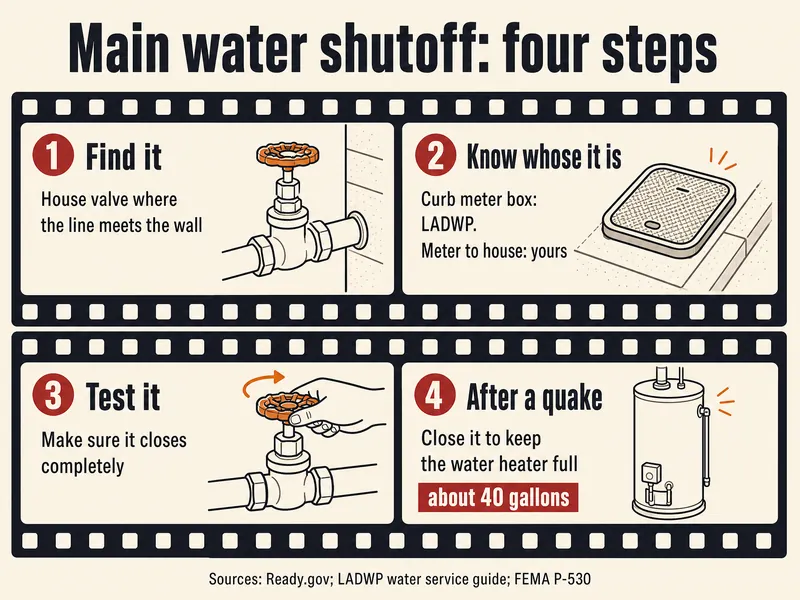
Turn a wheel-handled gate valve clockwise until it stops, or turn a lever-handled ball valve a quarter turn so the lever sits across the pipe. Then open a faucet inside: if water keeps running after a few seconds, the valve is not closing fully.
Ready.gov's advice is to make sure the valve shuts off completely, and to replace it if it is "rusted open" or will not close all the way. Test it on a calm day, not during an emergency. Turning it gently once or twice a year keeps an old gate valve from seizing.
When should you shut off water after an earthquake?
Shut the main as soon as you see or hear water where it should not be, or when officials report broken mains. The CDC says you may need to close it "to prevent contaminants from entering pipes in your home," and Ready.gov suggests keeping it shut until authorities say the water is safe to drink.
Closing it also traps the water already in the house. Ready.gov notes that gravity can drain the water heater and toilet tanks back out through broken lines unless the house valve is closed, and that heater may be your largest store of clean water. The emergency water storage page explains how to draw it off safely.
What if the shutoff valve is stuck?
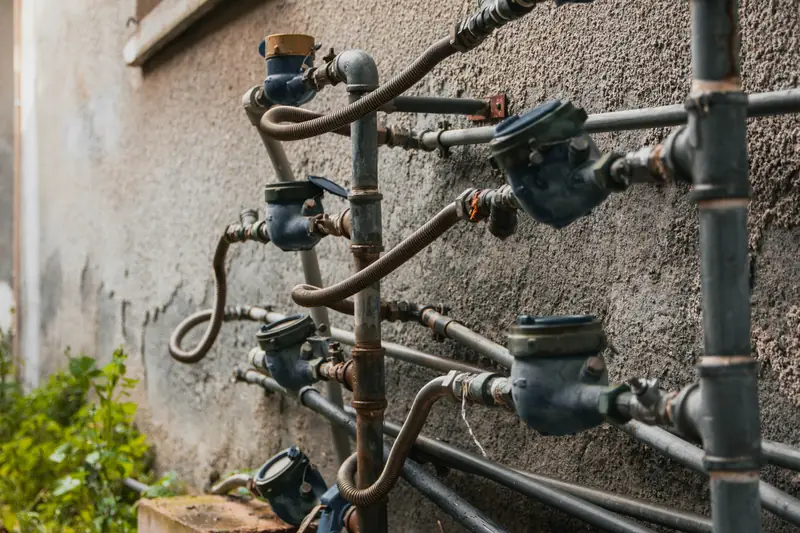
If the house valve will not turn by hand, stop before you break it. A wrench on a seized gate valve can snap the stem or crack the body and turn a stuck valve into a leak you cannot stop.
In a real emergency with water pouring out and no working house valve, call LADWP: its water service guide lists a 24-hour line for water trouble, including "emergency offs/ons." Utility crews carry the key for the curb valve. Afterward, have the house valve replaced. LAMC 94.103.1.2 lists replacing shut-off valves among jobs that need no LA plumbing permit, but the work still has to be done by a licensed plumber (C-36, checkable at cslb.ca.gov) or an owner who qualifies under LAMC 94.219.
How do you turn water back on safely?
Open the main slowly, a quarter turn at a time, with one cold faucet open somewhere in the house so air can escape. Sputtering and cloudy water that clears from the bottom up are normal: LADWP's water quality FAQ says milky water is usually air bubbles, which often show up after shut-offs.
Before you open it all the way, walk the house and yard and look for new wet spots, and read the meter with everything off. If the dial keeps moving, close the main again and use the hidden leak checks. If you drained the water heater, refill it fully before the gas or power goes back on, as the FEMA and Red Cross booklet Food and Water in an Emergency warns. Do not drink from the tap until local officials say the water is safe; the after-the-shaking checklist covers boil-water notices.
High pressure is worth a check too. If a pressure regulator sits next to the main and was jolted, a hose bibb gauge will show whether house pressure stays at or under the code's 80 psi limit.
Where this page comes from
Based on LADWP's water service guide, its Rules Governing Water and Electric Service, its 2025 Design Standards and Installation Requirements and its water quality FAQ; Ready.gov's Safety Skills page; the CDC page on finding clean water in an emergency (June 2025); FEMA P-530 (2020); the FEMA and Red Cross booklet on emergency food and water (2006); NIST-GCR-98-743; and the Los Angeles Municipal Code sections on permits and qualified installers, all read in October 2026. Left out: brand advice on valves, installation prices, and any LADWP phone number (the service guide prints it).
Still asking
Is the main water shutoff the same as the meter valve?
No. The meter valve, or curb valve, sits in the concrete box near the street and belongs to LADWP. The main shutoff is the house valve on your side of the meter, and it is the one meant for owners to use.
Can I use the curb valve if my house valve is broken?
Ready.gov says the street valve is very hard to turn and needs a special tool, and LADWP installs it for its own meter work. Call the utility's water trouble line instead, then have the house valve replaced.
How often should I test the main shutoff?
Ready.gov does not set an interval, but a gentle test once or twice a year shows whether the valve still closes. Do it when nothing is urgent so a stuck valve is a calm repair rather than a crisis.
Does closing the main shutoff turn off the water heater?
It stops new water from reaching the heater but does not turn off its gas or power. If you plan to drain the tank for drinking water, turn off the gas or power first, as the FEMA and Red Cross booklet directs.
What does a missing main shutoff mean?
Some older houses have no accessible house valve, and the only shutoff is the curb valve. A licensed plumber can add one on the owner's side of the meter. LA's no-permit list covers replacing an existing shut-off valve, so ask whether adding a new one needs a permit.
Should I shut off water before leaving home for a trip?
Many owners do, because a leak with nobody home runs for days. EPA WaterSense notes that an average home's leaks add up to over 9,300 gallons yearly, and a closed main stops any of that while you are gone.
Do apartment and condo owners have a main shutoff?
Usually there is a shutoff for the building and sometimes one per unit. Ask the building manager or HOA where they are before an earthquake, since only the building valve may stop a burst riser.
That is the end of this page. Back to the Shutoff Valley front page.