Folder 02 · 8 pages
Water Filters and Softeners in the Valley
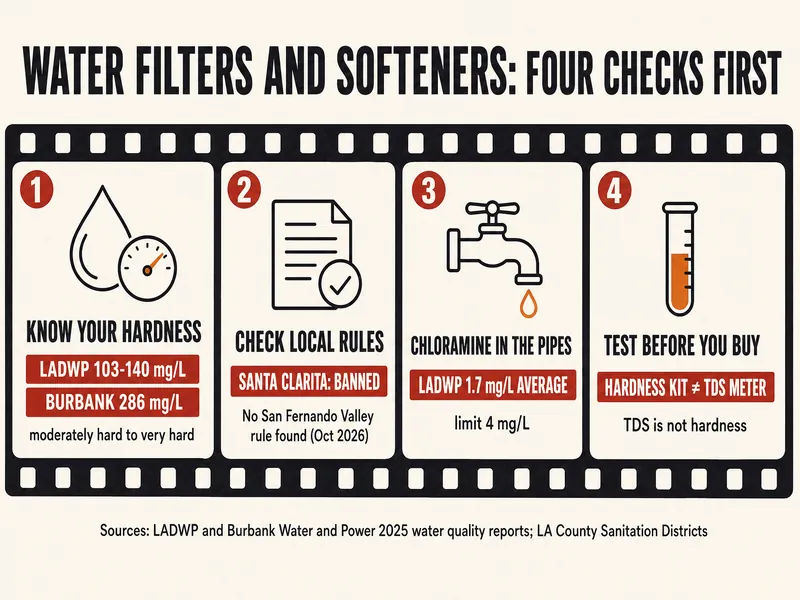
Water filters and softeners in the Valley start with your supplier's report: LADWP water averaged 103-140 mg/L of hardness in 2025, Burbank's 286 mg/L, and every supplier disinfects with chloramine.
Before you scroll
- Hardness in LADWP's three Valley sources ranged from 103 to 140 mg/L on average last year, its report on 2025 water; Burbank's blend averaged 286 mg/L (16.7 gpg).
- Hard water leaves scale but is not a health hazard, which San Fernando's 2025 report states in plain terms.
- LA County Sanitation Districts ban automatic salt softeners in the Santa Clarita Valley; no rule covering the San Fernando Valley was found in October 2026.
- LADWP's average total chlorine residual was 1.7 mg/L in 2025, against a 4 mg/L limit; chloramine is the disinfectant.
- Under-sink RO units are certified to NSF/ANSI 58 for a listed set of contaminants, so the listing, not the box, says what a model reduces.
- A TDS meter measures total dissolved solids, not hardness; a drop-test kit measures hardness.
Shutoff Valley's filters folder covers the treatment choices a Valley homeowner faces, in the order most people meet them. Each answer below links to the pages that go deeper. Reports print results in ppm (mg/L) and ppb (µg/L); for hardness, divide mg/L by 17.1 to get grains per gallon.
| Treatment | Targets | Does not handle | Page |
|---|---|---|---|
| Salt (ion-exchange) softener | Hardness, scale | Chloramine, lead, nitrate | Do you need a softener |
| Salt-free (TAC) conditioner | Scale formation | Hardness level, lead, nitrate, iron | Salt-free conditioners |
| Catalytic carbon, whole house | Chlorine and chloramine taste and odor (shops' claim) | Hardness | Chloramine filters |
| Under-sink reverse osmosis | Contaminants named in its NSF/ANSI 58 listing | Whole-house scale | Under-sink RO |
| Hardness drop-test kit | Measures hardness | Safety contaminants | Testing at home |
Do Valley homes need a water softener?
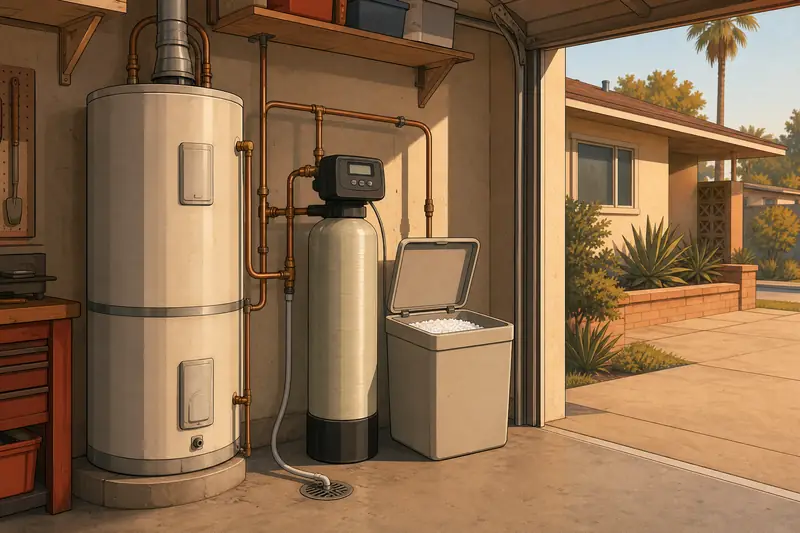
Most LADWP homes do not need a water softener, while Burbank, San Fernando and much of Glendale's water is hard enough that scale gives a stronger reason. On the USGS scale, over 180 mg/L is very hard: Burbank averaged 286 mg/L, the City of San Fernando 190 mg/L and Glendale's own groundwater plant 350 mg/L in 2025, while LADWP's Valley sources stayed between 103 and 140 mg/L. EPA's WaterSense softener guide says softeners are often recommended above 180 mg/L.
 Filters and softenersDo you need a water softener in the Valley?
 Filters and softenersWater softener sizing for Valley water
 Filters and softenersSalt-free water conditioners: what they do
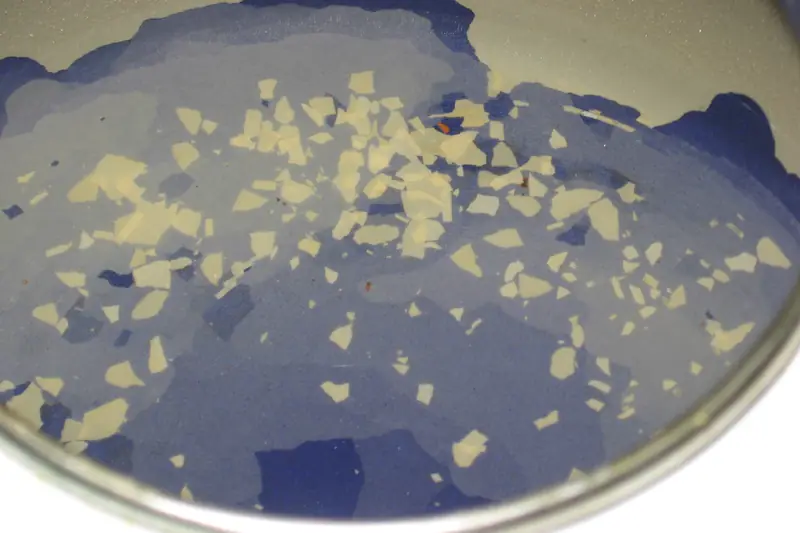 Filters and softenersHard water scale and spots
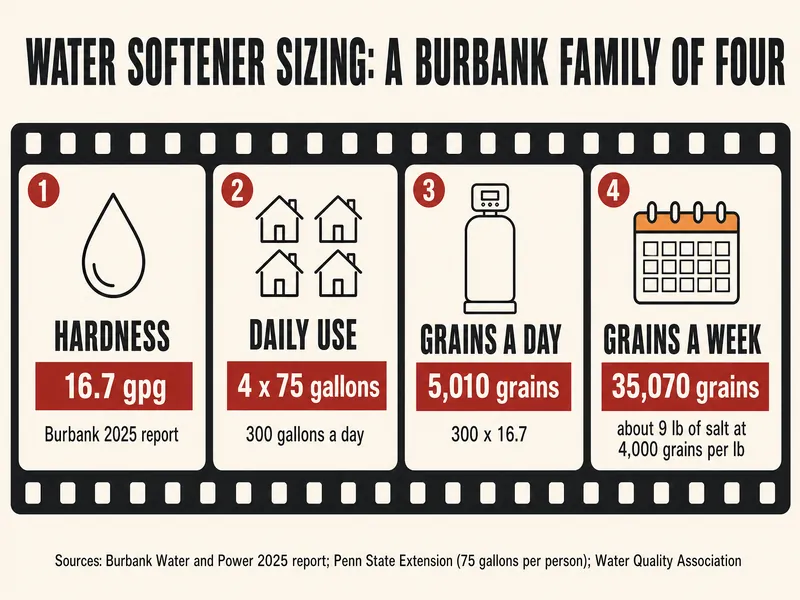
Sizing comes down to hardness times daily gallons: Penn State Extension plans on 75 gallons per person a day, so four people on Burbank water remove about 5,010 grains a day. Salt-free units leave the hardness in and change its form, which Nebraska Extension calls descaling rather than softening.
Are softeners allowed where you live?
In the San Fernando Valley, no rule restricting water softeners was found in October 2026; in the Santa Clarita Valley, automatic salt softeners are banned. California Water Code § 13148 lets a sewer or recycling agency restrict them only after a Regional Board finding and a public hearing. The LA County Sanitation Districts have banned new installs in Santa Clarita since 2003, and the Newhall Ranch ban took effect October 1, 2026.
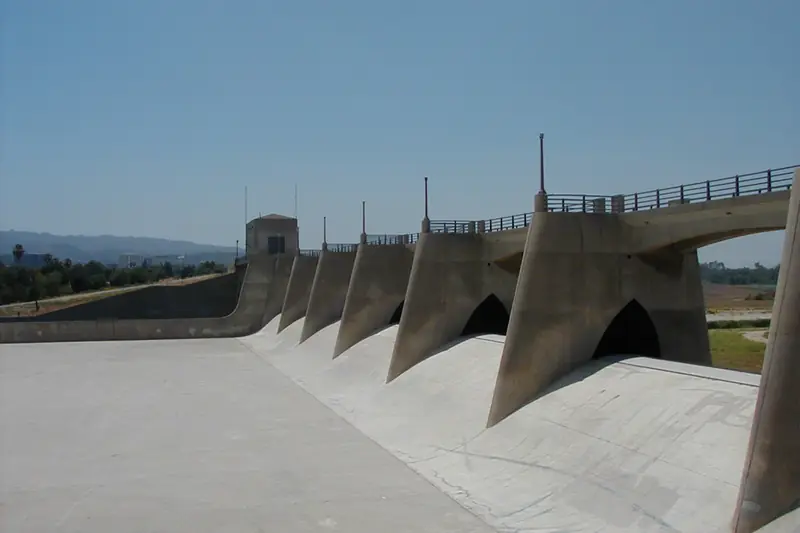
Which filters handle chloramine?
Catalytic carbon is the filter type sold for chloramine, and pet-store neutralizers handle aquarium water. LADWP, Burbank and Glendale all use chloramine; average residuals in 2025 were 1.7 mg/L (LADWP), 2.1 mg/L (Burbank) and 1.25 mg/L (Glendale), each well below the 4 mg/L maximum. LADWP's water quality FAQ says granular activated carbon filters and pet-store neutralizers remove both chlorine and chloramine, and that dialysis users must remove it.
A softener does nothing for chloramine, and a chloramine filter does nothing for hardness, so the two are separate decisions. No contaminant-reduction certification for chloramine was found for the whole-house carbon units the linked shops sell, so their chloramine claims are the shops' own.
When does reverse osmosis make sense?
Reverse osmosis makes sense when you want lower levels of a specific contaminant at the drinking tap, and the model's NSF/ANSI 58 listing names it. Valley figures are already under the limits: LADWP's 2023 lead sampling found a 90th percentile of 3.9 ppb against the 15 ppb action level, and Burbank's chromium-6 averaged 4.5 ppb in 2025 against California's 10 µg/L limit. Certification lists differ by model, so read the certifier's listing rather than the packaging.
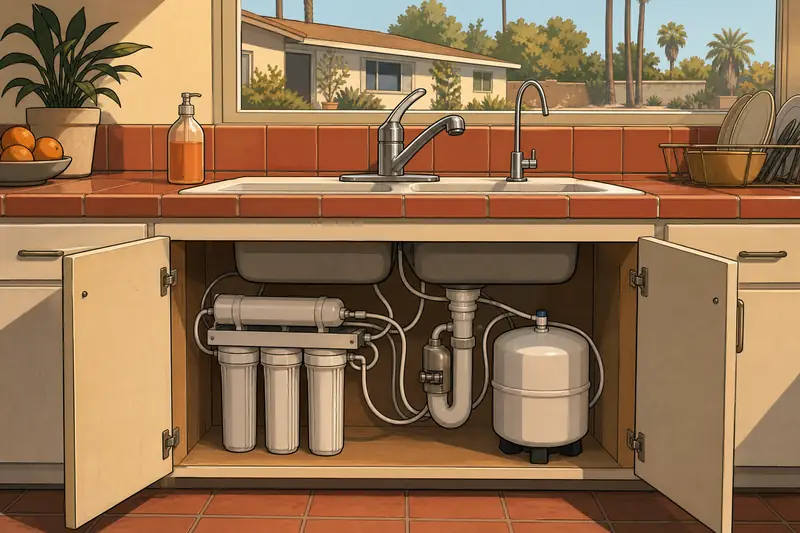
RO units need upkeep: LA County Sanitation Districts' alternatives page says sediment filters need changing every 6 months and the membrane every 3 to 5 years.
How do you test before you buy?
Test hardness with a drop-test kit and read your supplier's report before buying anything. A TDS meter reports total dissolved solids, which ran 234-297 mg/L in LADWP's Valley sources and 448 mg/L in Burbank in 2025, but TDS is not hardness and is not a safety test. For lead, use a certified laboratory.
Valley numbers behind the folder
- 103-140 mg/LLADWP Valley hardness by source, 2025LADWP Drinking Water Quality Report 2025
- 286 mg/LAverage hardness of Burbank tap water in 2025Burbank Water and Power 2025 report
- 1.7 mg/LLADWP average total chlorine residual, 2025LADWP Drinking Water Quality Report 2025
- 2003Start of the Santa Clarita Valley salt-softener banLA County Sanitation Districts
Background on the water itself lives in the tap water folder: Valley water hardness by supplier, chloramine in Valley water and the Shutoff Valley home page.
Where this page comes from
This folder page uses the 2026 reports (calendar-2025 data) from LADWP, Burbank Water and Power, Glendale Water & Power and the City of San Fernando; LADWP's water quality FAQ; the USGS hardness classes; EPA WaterSense's 2026 softener guide; California Water Code § 13148; and LA County Sanitation Districts' Santa Clarita pages, all read in October 2026. The pages linked from here carry the full sources. Left out: product rankings, removal percentages from product listings and any health claim about hard or softened water.
Still asking
What is the first water treatment a Valley home should consider?
None, until you know your water. Read your supplier's 2026 report, test hardness at the kitchen tap, and decide whether scale, taste or a specific contaminant is the problem. Each points to a different device.
Can one system soften water and remove chloramine?
Some setups pair a softener with a catalytic carbon tank, but they are two stages doing two jobs. Check what each stage is for and what, if anything, it is certified to reduce.
Do Valley homes on LADWP water need a filter for safety?
LADWP reported meeting all drinking water standards for 2025. A filter is a choice for taste, chloramine sensitivity (aquariums, dialysis) or extra margin on a named contaminant, not a requirement.
Does a water softener remove lead or chromium-6?
No. A softener targets hardness. For lead or chromium-6 at the drinking tap, compare reverse osmosis models whose NSF/ANSI 58 listing names that contaminant.
Is hard water in Glendale the same everywhere?
No. Glendale mixes water from its groundwater plant, 350 mg/L last year, with MWD supplies averaging 140 to 234 mg/L, so hardness varies by area. A home test gives your own figure.
Are salt-free softeners allowed in Santa Clarita?
Yes. The Sanitation Districts accept any household system that needs no added sodium or potassium chloride, which covers TAC conditioners, exchange tanks, carbon and RO.
That is the end of this page. Back to the full list of Valley water and plumbing pages.