Flushing a Water Heater on Hard Water
Flushing a water heater once a year is what A. O. Smith and Rheem ask of most tanks, and A. O. Smith's checklist moves hard-water homes, like much of Burbank and Glendale, to twice a year.
Call sheet: what this page covers
Before you scroll
- Rheem says to flush the tank annually; A. O. Smith says most tanks need it at least once a year and more often on hard water.
- A. O. Smith's maintenance checklist suggests service twice a year where water is hard.
- Burbank's 2025 supply averaged 286 mg/L hardness and LADWP's Valley sources 103-140 mg/L, so the right schedule depends on your supplier.
- Turn the gas control to OFF or switch off the breaker first; an electric tank must be full again before power returns.
- Keep draining until no more sediment comes out, A. O. Smith says; if the drain valve clogs, call a plumber rather than force it.
- DOE's Energy Saver guide (2022) also suggests draining a quart from the tank every 3 months, following the maker's directions.
How often should you flush a water heater?
Flush a tank water heater at least once a year. That is the line both big makers take: Rheem's advice is "Flush the tank annually," and A. O. Smith's maintenance guide says "most types of tank water heaters require flushing at least once per year," adding that hard-water homes "may need to flush" more often because more minerals settle out.
A. O. Smith's maintenance checklist is more specific: service once a year, or twice a year with hard water. Your own manual has the last word, since schedules vary by model.
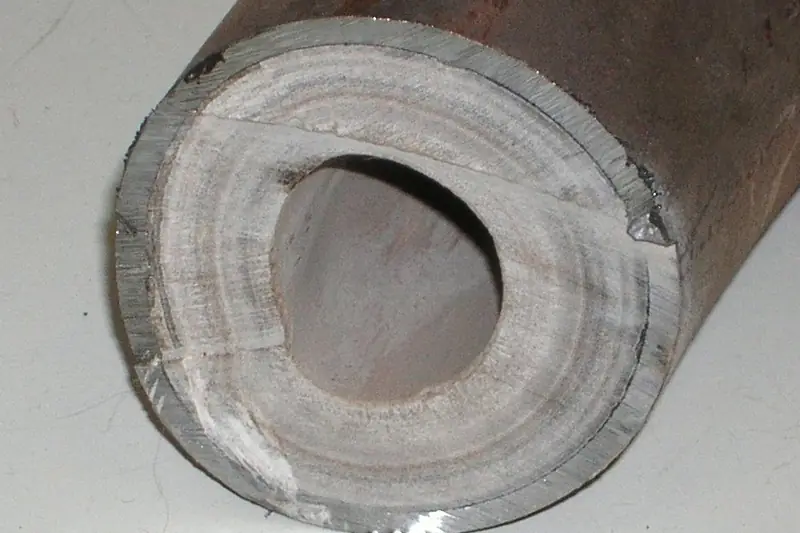
What counts as hard depends on where the water comes from. Burbank Water and Power's 2025 report shows its blend averaging 286 mg/L (16.7 gpg as printed), the City of San Fernando's wells 190 mg/L, and Glendale's local plant 350 mg/L before blending; all are very hard on the USGS scale, which starts "very hard" above 180 mg/L. LADWP's Valley sources ran 103-140 mg/L in its 2026 report. Reports list hardness in ppm, the same unit as mg/L. The hardness page shows which supplier serves your street.
| Source | What it says | Applies to |
|---|---|---|
| Rheem lifespan article | Flush the tank annually | Tank heaters |
| A. O. Smith maintenance guide | At least once a year; more often on hard water | Tank heaters |
| A. O. Smith maintenance checklist | Service yearly, twice a year with hard water | All its heaters |
| DOE Energy Saver guide (2022) | Drain a quart every 3 months, per the maker's directions | Storage tanks |
| Rinnai SENSEI manual | Flush the heat exchanger yearly from 61 mg/L hardness | Tankless units |
What do you need before flushing a water heater?
You need a garden hose that reaches a safe drain or the yard, a bucket, gloves and eye protection, and a flathead screwdriver for drain valves without a handle. A. O. Smith's guide suggests turning the heater off a few hours ahead so the water cools, wearing "thick gloves and safety goggles," and keeping old towels nearby.
Know where your main water shutoff is too, in case a valve sticks open; the main shutoff page shows how to find it. Point the hose somewhere hot, cloudy water can run without harm. Water from the drain "may be extremely hot," the A. O. Smith manual warns, so keep the flow aimed away from anyone.
How do you flush a gas or electric tank?
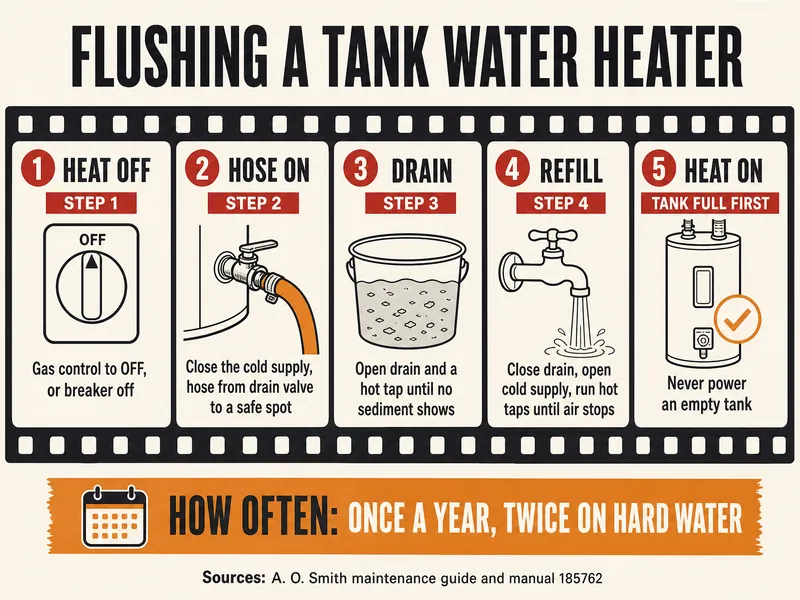
The steps below follow A. O. Smith's guide and its residential manual (part 185762). They are the same for gas and electric tanks except for how the heat is turned off and back on.
- Turn off the heat. On a gas model, turn the gas control dial to "OFF" to put out the pilot. On an electric model, switch off the breaker or disconnect.
- Close the cold water supply to the heater and open a nearby hot tap so air can get in and the tank drains freely.
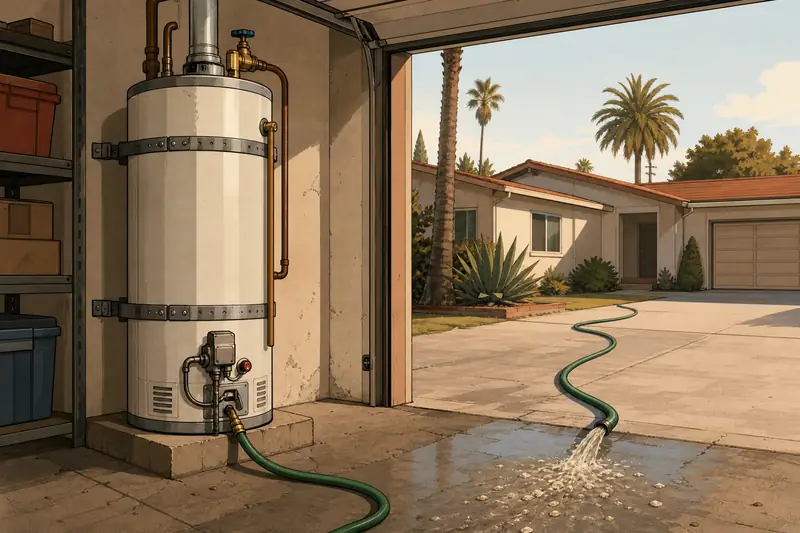
- Attach the hose to the drain valve near the bottom of the tank and run it to a drain, a bucket or outdoors.
- Open the drain valve by hand or with a screwdriver. Let it run, and keep flushing with cold water until you no longer see sediment coming out.
- Close the drain valve, remove the hose, then open the cold supply. Leave hot taps open until air stops sputtering and water runs steadily, then close them.
- Turn the heat back on only once the tank is full. Switch the breaker back on, or set the gas control to run and relight the pilot per the label.
The order of the last step matters most on electric tanks. A. O. Smith's manual says water "must flow from the hot water faucet before turning 'ON'" the power, and the maker "will not warrant any elements damaged" by heating an empty tank.
What if the drain valve clogs?
Stop and get help. A. O. Smith's guide says sediment "can clog the drain valve and prevent you from removing the water," and its advice is to "call a plumber or service technician for assistance if you can't flush the tank." Its checklist adds that technicians carry tools to clear the valve or replace it.
A valve that will not open, or will not close fully afterward, is the moment to stop. Close the cold supply, cap the valve with a hose cap if it drips, and call a licensed plumber (C-36).
When is flushing a bad idea?
Skip it, or hand it to a plumber, when the tank is old and already showing trouble. Rheem notes that a puddle fed by the tank body itself usually means the tank itself has failed, and flushing will not fix a corroded shell; the tank life page covers when to replace instead.
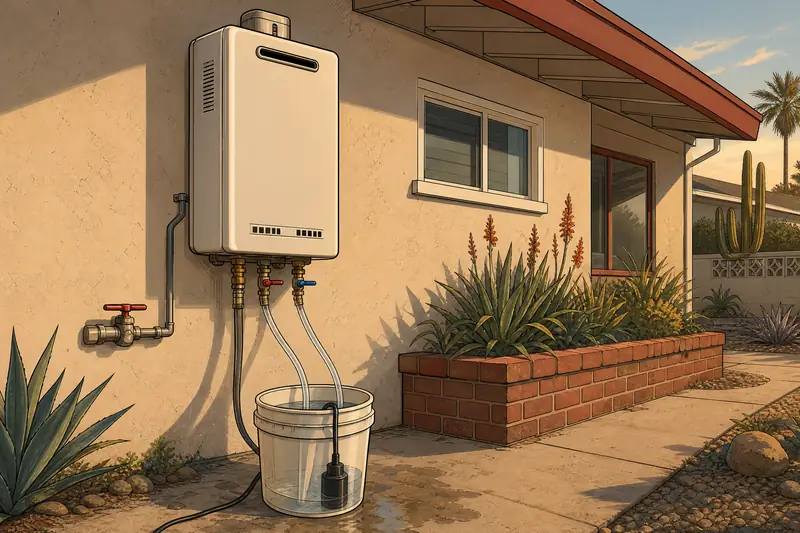
Also hold off if you are not comfortable relighting a gas pilot, if the gas line or vent looks damaged after an earthquake, or if you smell gas. In that case leave the area and call 911 or the gas company from outside; the after-shaking checklist covers the order of checks. A tankless heater is a different job entirely: it is descaled with a pump and vinegar, as the tankless descaling page explains.
What should you check while it drains?
Use the time to look at the parts that wear out. A. O. Smith's guide asks owners to inspect the temperature and pressure (T&P) relief valve once a year and have a professional look every 5 years. Lift its lever briefly with a bucket under the discharge pipe; if no water comes out, or it keeps dripping afterward, the valve needs replacing.
Look at the straps while you are kneeling there: the plumbing code wants a strap within the top and bottom thirds of the tank, with the lower band 4 or more inches clear of the controls (see water heater straps). Check the setpoint too: DOE suggests 120°F, and A. O. Smith ships its heaters at that setting. If the anode is due, it comes out after draining only about 5 gallons, per the A. O. Smith manual.
Flushing in numbers
- 1 a yearMinimum flushing for most tank heatersA. O. Smith maintenance guide
- 2 a yearService visits A. O. Smith suggests on hard waterA. O. Smith maintenance checklist
- 120°FWater heater setting DOE calls safe for most peopleDOE Energy Saver Guide (2022)
- 5 yearsHow often a professional should inspect the T&P valveA. O. Smith maintenance guide
Where this page comes from
This page is based on A. O. Smith's maintenance guide, maintenance checklist and residential electric manual (part 185762), Rheem's lifespan article, DOE's Energy Saver Guide (2022), Rinnai's SENSEI RX manual, the USGS hardness scale and each Valley supplier's 2026 water report on calendar-2025 testing; all were opened in October 2026. Not included: service prices, brand-specific drain valve parts, and chemical tank cleaners, which no maker page read here recommends for tank models.
Still asking
How long does it take to flush a water heater?
No maker gives a fixed time. A. O. Smith's rule is to keep flushing until no more sediment comes out, so a tank that has gone years without flushing takes longer.
Should the water heater be completely drained to flush it?
A. O. Smith describes draining the tank and flushing with cold water until it runs free of sediment. A partial drain of a few gallons is what it describes for checking the anode, not for a full flush.
Can I flush a water heater without turning off the water?
A. O. Smith's steps close the cold inlet before the drain is opened, and its manual's draining steps do the same. Opening the drain with the supply on just pushes water through the tank under pressure, so follow your model's manual.
What do the white flakes coming out of the hose mean?
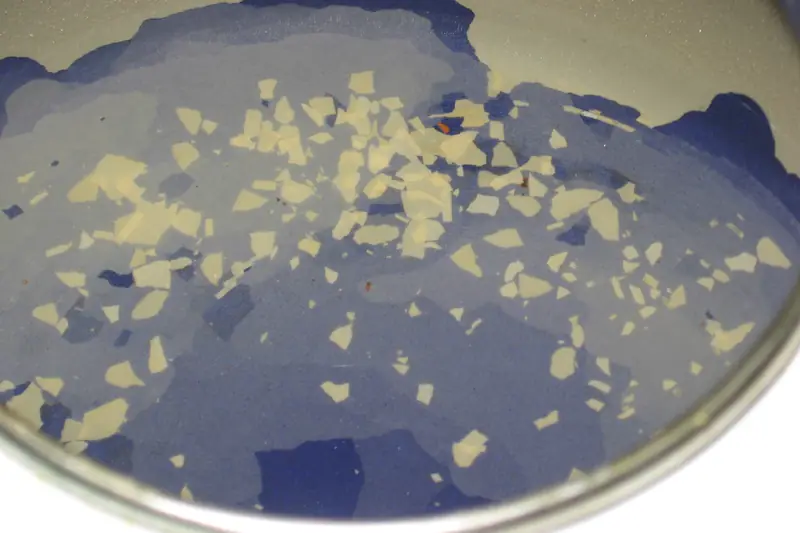
They are mineral sediment, mostly calcium scale from hard water. Plenty of flakes on Burbank, Glendale or San Fernando water is a sign to flush on a shorter schedule.
Why does my heater rumble after a flush?
A. O. Smith links popping and rumbling to sediment on the tank floor. If one flush leaves the noise, hardened scale may remain, and a plumber can judge whether it can be cleared.
Is it safe to flush an old water heater that was never flushed?
It can stir loose debris that clogs the drain valve, A. O. Smith warns. On an older tank, have a plumber do the first flush and check the valve and anode at the same time.
Does a heat pump water heater need flushing too?
Yes. Rheem says cleaning the air filter and flushing the tank on a regular basis help a heat pump model keep its efficiency, since it still stores water in a tank.
That is the end of this page. Back to the full list of Valley water and plumbing pages.