Plumbing Checks After an Earthquake
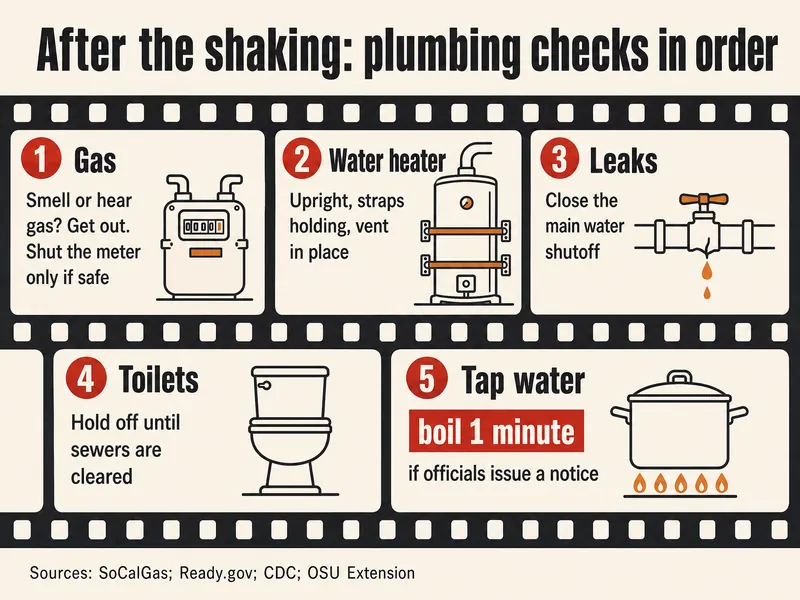
Plumbing checks after an earthquake go in a fixed order: gas first, then the water heater, then water leaks, then drains and toilets, and only then the tap water, following your utility's notices.
Call sheet: what this page covers
Before you scroll
- SoCalGas says to shut the gas meter only if you smell gas, hear it escaping or see other signs of a leak, and only if it is safe; never turn it back on yourself.
- After Northridge, about 151,000 gas customers lost service and 81 percent of those outages were customer-initiated (NIST-GCR-98-743), so shutting off gas without a leak can mean a long wait.
- NIST's 1994 field report found water heaters "appear to be a source of gas leaks" in California quakes (NIST SP 862).
- San Fernando's city water report for 2025 gives a 15-minute meter test for leaks: everything off, then see whether the meter moved.
- Oregon State University Extension advises avoiding toilets after a major quake even if your own sewer line is fine, because street sewers may be broken (EM 9334, 2021).
- If officials issue a boil-water notice, the CDC says a rolling boil of 1 minute is enough at Valley elevations.
The first hour after a strong quake is for people: check for injuries, expect aftershocks, and leave a damaged building, as Ready.gov advises. Plumbing comes next, and the order matters, because a gas leak can turn into a fire while a water leak only gets wetter.
What should you check first after an earthquake?
Check for gas first. If you smell gas or hear a blowing or hissing sound, Ready.gov says to open a window, get everyone out, turn off the gas at the outside main valve if you can, and call the gas company from outside or a neighbor's home; call 911 for fire or injuries.
SoCalGas's emergency page adds the how: the shutoff is on the riser about 6 to 8 inches above the ground, and a 12-inch or larger adjustable wrench turns it a quarter turn until it sits crosswise to the pipe. FEMA P-530 says a rapidly spinning gas meter is also a sign of a leak. Until you are sure there is no leak, Glendale's fire department warns against open flames and anything electrical that could spark.
If you smell nothing, leave the gas on. Once the meter valve is closed, only SoCalGas or its certified contractors may open it again, and after a big quake that can take days or weeks. A house with a seismic gas shutoff valve may already have closed itself.
After-the-quake numbers
- 151,000gas customer outages after Northridge, 81% started by customersNIST-GCR-98-743
- 110earthquake-related fires in the region between the main shock and midnightNIST-GCR-98-743
- 15 minutesmeter watch with all water off to spot a leakCity of San Fernando 2025 water quality report
- 1 minuterolling boil needed when a boil-water notice is in forceCDC
How do you check the water heater after a quake?
Look at the water heater second, because it carries both gas and water. NIST's report on the 1994 earthquake noted that inadequately secured water heaters "are likely to tip over," and that a destroyed multifamily building's fire was reported to have started with water heater damage.
Check that the tank is upright and has not shifted, that both straps are still tight to the wall, and that the gas line and water connectors are intact. California requires every residential water heater to be braced, anchored or strapped (Health and Safety Code § 19211), and the 2025 California Plumbing Code puts the straps in the upper and lower thirds of the tank, the lower one at least 4 inches above the controls (§ 507.2). The water heater straps page explains the rule.
If the heater moved, the vent pipe on top is loose, or you smell gas near it, leave its gas off and have a licensed plumber (C-36) or SoCalGas inspect it before relighting. If the tank is leaking, close the cold water valve at its top or the main water shutoff.
How do you spot hidden leaks after shaking?
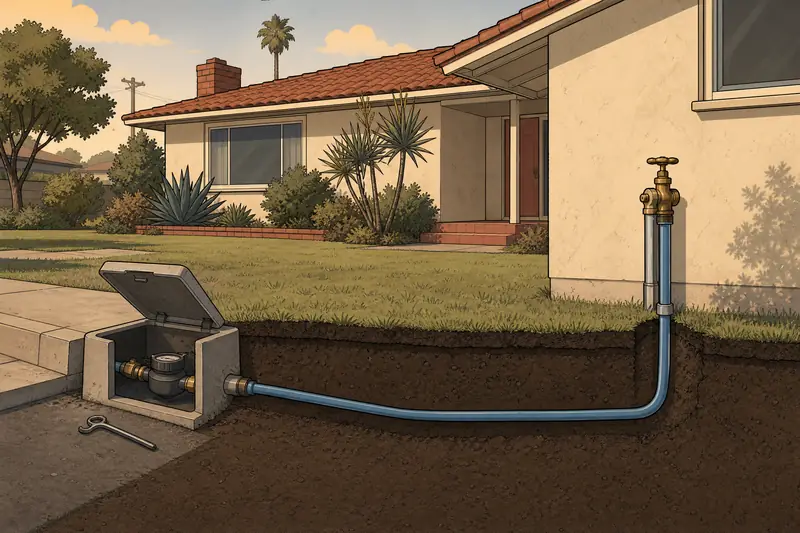
Use the water meter. With every faucet, appliance and irrigation valve off, read the meter, wait 15 minutes, and read it again; San Fernando's city water report for 2025 says any movement means a leak. EPA WaterSense gives a slower version: no water use for two hours, and any change on the dial points to a leak.
Then walk the house. Look for damp drywall, warm or wet spots on a slab floor, water around the water heater and toilets, and soggy ground along the line from the meter to the house. Shaking can crack old joints in walls and under slabs where nothing shows for days, which is why the hidden leak checks and the notes on slab leaks are worth a read.
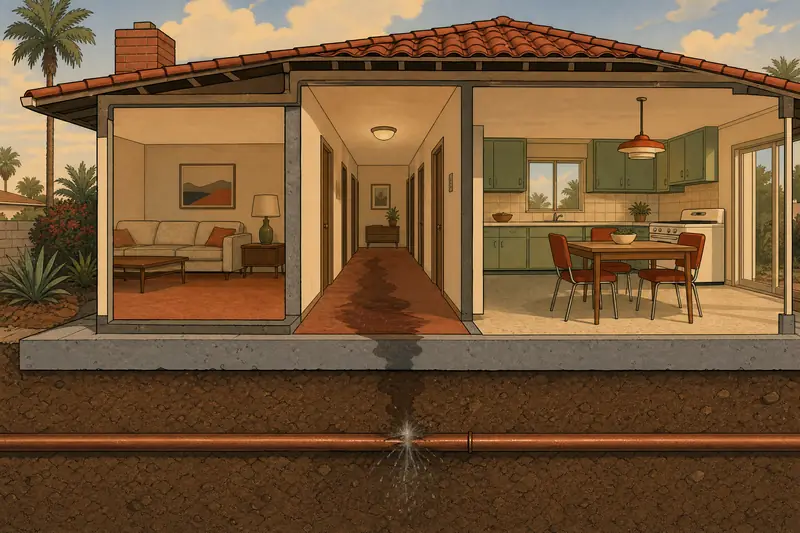
A leak on the house side of the meter is the owner's to fix. One between the street and the meter belongs to the utility, so report it to whichever of LADWP, BWP or GWP bills you.
Is it safe to flush toilets after an earthquake?
Not until local officials say the sewers are working. Oregon State University Extension's sanitation publication EM 9334 (2021) puts it plainly: "Avoid using toilets even if your home sewer lines are not damaged," because pipes in the street may be broken (OSU Extension). The City of Los Angeles's Earthquake Annex has LA Sanitation assess sewer flow and pumping after a quake, so watch local news and emergency alerts for word on the sewers, as Ready.gov advises for all post-quake instructions.
Until then, line the toilet bowl or a bucket with heavy garbage bags; Ready.gov's kit list includes bags and plastic ties for personal sanitation, and OSU recommends a two-bucket system that keeps urine and solids apart. In Los Angeles the owner is responsible for the sewer lateral from the house to the city main, so a backup that starts at your cleanout is a private repair; see who owns the sewer lateral.
| Problem | Whose pipe | Who to contact |
|---|---|---|
| Gas smell, hissing, spinning meter | Utility to the meter; owner after | Leave, then SoCalGas from outside; 911 for fire |
| Water leak before the meter | LADWP, BWP or GWP | Your water utility's trouble line |
| Water leak after the meter | Owner | A licensed C-36 plumber |
| Sewer main in the street | City of Los Angeles | LA Sanitation |
| Sewer backup in the lateral | Owner (LA Bureau of Engineering) | A plumber or bonded sewer contractor |
When is tap water unsafe after a quake?
Treat tap water as unsafe whenever your utility or the city says so, and whenever pressure has dropped or the water looks cloudy or smells wrong. Ready.gov notes that cracked lines may pollute the supply to your house and suggests keeping the main shut until authorities say the water is safe to drink, and OSU Extension notes that health officials may call for boiling after a loss of pressure.
Listen for notices: LA Emergency Management's kit checklist suggests a battery or crank radio tuned to AM 1070 for emergency alerts. Under a boil-water notice, boil water hard for a full minute, or use stored water and the bleach doses on the emergency water storage page. Once the notice lifts, run the cold taps for a few minutes before drinking; the tap water safety page covers normal-day quality.
What did Northridge teach about plumbing after an earthquake?
Northridge taught that the gas and water lines under a city fail by the hundreds, and that households make the recovery slower or faster. NIST's fire study counted about 110 quake-related fires, roughly 1,400 breaks and leaks across LADWP's pipes, and hydrants without pressure across much of the west and north Valley.
It also found that most of the 151,000 gas outages came from customers closing their own valves, and NIST's 1994 report explained the cost: technicians had to test each system before turning service back on. Shutting gas only for a real leak, keeping water heaters strapped, and knowing your water shutoff are the three habits that would have helped most.
Where this page comes from
Based on Ready.gov's Earthquakes and Safety Skills pages; SoCalGas's emergency shutoff and earthquake valve pages; FEMA P-530 (2020); the Glendale Fire Department's earthquake page; NIST-GCR-98-743 (1998) and NIST Special Publication 862 (1994); Health and Safety Code § 19211 and the 2025 California Plumbing Code; the City of San Fernando's 2025 water quality report; EPA WaterSense; Oregon State University Extension EM 9334 (2021); the City of Los Angeles Earthquake Annex (2021) and LA Emergency Management's kit checklist; the LA Bureau of Engineering sewer permit manual; and the CDC's water safety page, all read in October 2026. Left out: utility phone numbers, repair costs and any count of toppled water heaters, which no primary source gave.
Still asking
Should I turn off the gas after every earthquake?
No. SoCalGas, Ready.gov and FEMA all say to shut it off only if you smell or hear gas or see the meter spinning fast. After Northridge most gas outages were customer shutoffs, and each one needed a utility visit to restore.
What if the seismic gas valve tripped and there is no gas smell?
SoCalGas says you may reset it by the maker's instructions but recommends a professional or SoCalGas do it and relight the pilots. Every pilot went out when the valve closed, so each appliance needs relighting once the gas returns.
Can I use the water heater if its pilot is out?
The stored water is still usable for drinking if the tank is upright and undamaged. Turn its gas or power off before draining it, and leave relighting to a professional if the gas supply was shut off.
How do I know if the sewer is backing up?
Water rising in a floor drain, a shower or the lowest toilet when you run water elsewhere is the usual sign. Stop using water inside and check the cleanout outside; in Los Angeles the lateral is the owner's all the way to the city main, while the main itself is the city's.
Is cloudy tap water after a quake a problem?
Cloudy water that clears from the bottom of a glass up is usually air from lines that were drained and refilled. Water that stays cloudy, colored or smelly should not be used for drinking until your utility says it is safe.
Is it worth checking under a raised-floor house?
Yes, once aftershocks ease and only if the crawl space is safe to enter. Look for wet soil, dripping joints and gas pipes that have pulled away from their supports, and leave anything gas-related to a licensed plumber.
That is the end of this page. Back to all five Shutoff Valley folders.