Slab Leaks in San Fernando Valley Homes
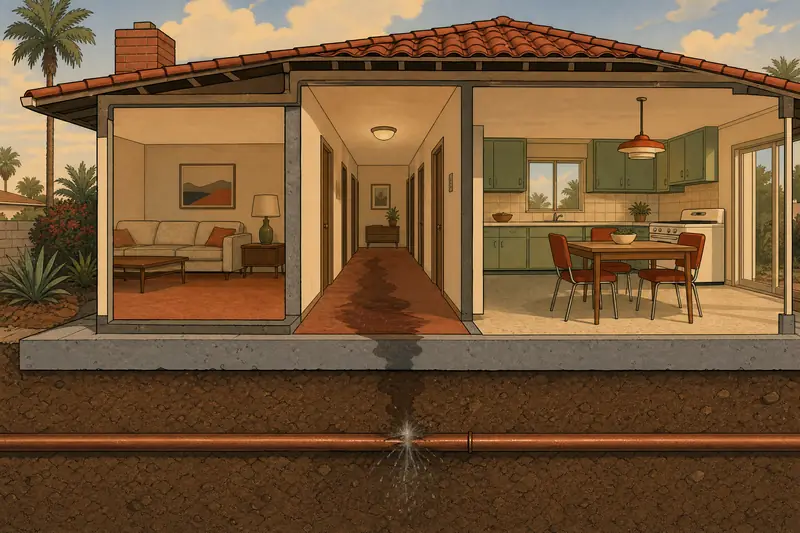
Slab leaks in Valley homes are breaks in water pipes under or inside a concrete floor; a water meter that keeps moving with every tap off is the clearest early proof, before any floor is opened.
Call sheet: what this page covers
Before you scroll
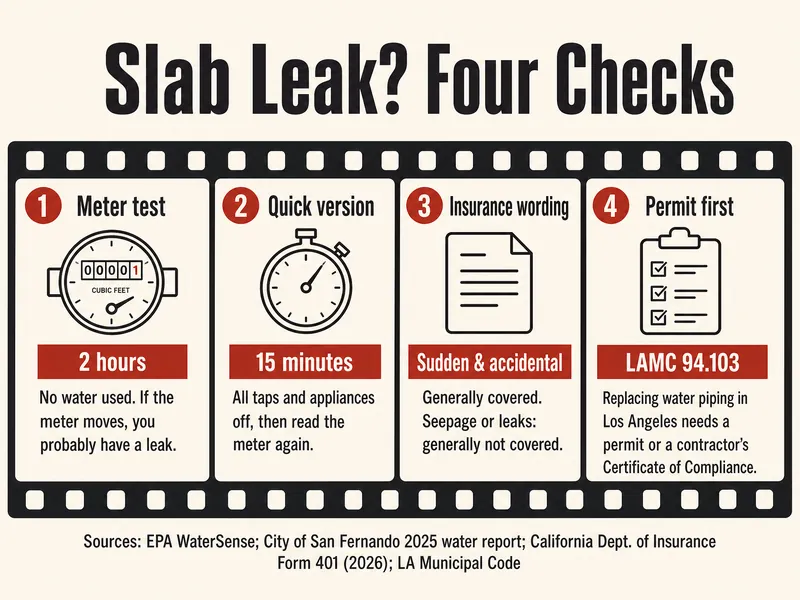
- EPA WaterSense says to read your meter before and after two hours with no water in use; any change "probably" means a leak (EPA).
- The City of San Fernando's 2025 water quality report gives a shorter version: everything off, check the meter again after 15 minutes.
- California's Department of Insurance lists "sudden & accidental water damage" as typically covered, and water damage from "seepage or leaks" as generally not covered (Form 401, revised January 2026).
- In Los Angeles, everything from the LADWP meter to the house is the owner's responsibility, so a leak under the slab is yours to find and fix.
- LA code needs a plumbing permit to replace piping (LAMC 94.103.1.1); fixing a leak without removing fixtures or drain sections is exempt (94.103.1.2.3).
- LADWP listed a rebate of up to $150 for a Wi-Fi flow or leak monitor on single-family homes in October 2026; check before buying.
Why are slab leaks common in Valley homes?
Slab leaks happen wherever water lines run beneath or through a concrete floor, and many Valley houses are built on slabs rather than over a crawl space. Once a pipe sits in gravel under concrete, a small hole can run for weeks before anything shows indoors.
Why the pipe fails is a harder question. For copper, the causes of pinholes are debated; water chemistry, flow velocity and installation are all studied, and the pinhole leak page covers what is known. Pressure is one factor you can measure yourself: the 2025 California Plumbing Code (§608.2) requires a regulator where street pressure exceeds 80 psi, and the pressure regulator page shows the hose-bibb test.
What are the signs of a slab leak?
The most reliable sign of a slab leak is a water meter that moves when nothing in the house is running. Other clues are indirect, and none proves a slab leak alone:
- a damp or warm patch on the floor, or carpet that stays wet near an interior wall;
- the sound of running water when every tap is closed;
- a water bill that climbs while your habits have not changed;
- a water heater that seems to run more often, which can point to a hot-side leak.
EPA offers a seasonal yardstick: in January or February, a family of four using more than 12,000 gallons a month "could" have serious leaks. Compare your winter bill with that before you call anyone.
How do you confirm a slab leak with the meter?
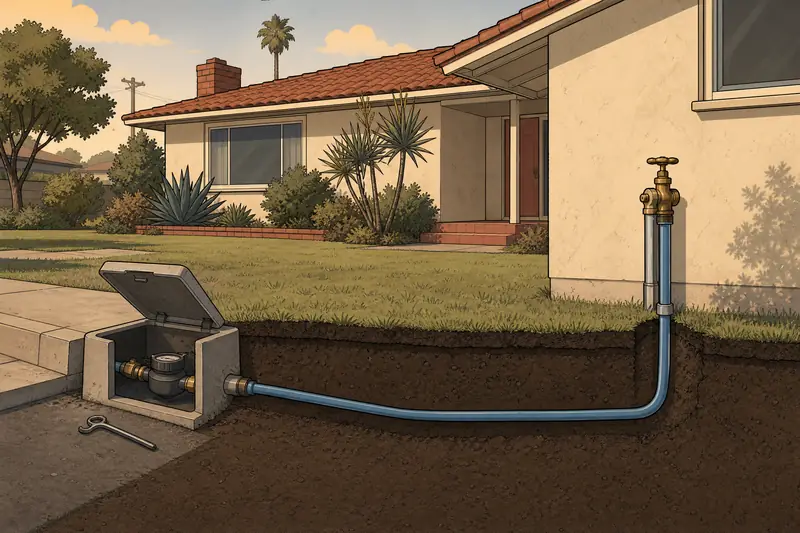
You confirm a slab leak by proving water is moving with every fixture off, then narrowing down where it goes. LADWP's meter sits in a concrete box near the curb, and the line from it to the house is yours (LADWP water service guide).
- Turn off every faucet, the irrigation controller, the ice maker and the washer.
- Read the meter and note the low-flow indicator, if it has one.
- Wait 15 minutes (City of San Fernando) or two hours (EPA WaterSense) and read it again.
- If it moved, close the house shutoff valve and watch the meter. If it stops, the leak is inside the house; if it keeps turning, look at the yard line between meter and house.
- Rule out toilets with a dye test before blaming the slab.
The hidden leaks page walks through toilet, irrigation and fixture checks in more detail, and the main water shutoff page shows where the house valve usually sits.
How are slab leaks found?
Slab leaks are usually located by a leak detection specialist or plumber after the meter test shows a loss. No government agency publishes a slab-leak detection method, so treat any description as general practice rather than a rule. The usual sequence is to separate the hot and cold sides, see which one loses pressure, then listen for the leak through the floor or use other equipment to pin down a spot before cutting concrete.
Ask the person doing the work which tests they will run, what each costs, and how precise a location they expect to give you. A written report with the suspected spot marked on a floor plan helps you compare repair quotes and talk to your insurer.
Should you repair the spot or reroute the line?
Repair the spot when there is one leak in otherwise sound pipe; consider rerouting when the same line has leaked more than once. A spot repair means opening the floor at the leak and patching the pipe. Rerouting abandons the line under the slab and runs new pipe through the attic or walls, which the repiping page describes.
The code shapes both choices. Copper water pipe must be at least Type L, and PEX buried in soil for drinking water must be sleeved in a material that resists solvents and petroleum (2025 CPC §604.3 and Table 604.1, IAPMO). Hot-water piping must be insulated (§609.12), which matters for lines moved into a hot attic. The copper vs PEX page compares the materials.
Paperwork depends on the job. Los Angeles exempts "repairing of leaks" from permits when no fixture or drain section has to be removed (LAMC 94.103.1.2.3), but replacing piping needs a permit (94.103.1.1, amlegal). On a detached house, a certified licensed contractor may replace defective water piping of equal size and file a Certificate of Compliance instead. A C-36 plumbing contractor's license can be checked at cslb.ca.gov.
Does insurance cover slab leaks?
Insurance may cover water damage from a slab leak, but the wording of your policy decides, and long, slow leaks are where claims usually fail. The California Department of Insurance's residential insurance page lists "sudden & accidental water damage" among perils typically covered, and lists "water damage cause by seepage or leaks," "wear and tear or maintenance," mold and neglect among perils generally not covered.
The department's claims guide says homeowners should "immediately attempt to find and stop leaks at the source" and report water damage to their agent right away. Policies often separate the cost of reaching and fixing the pipe from the damage the water caused, so ask your insurer how your policy treats each. Keep the meter readings, photos and the detection report.
Slab leaks in numbers
- 2 hoursno-use window for EPA's meter testEPA WaterSense
- 15 minshorter meter check in the City of San Fernando's 2025 reportCity of San Fernando 2025 water report
- 12,000 galmonthly winter use for a family of four that may signal serious leaksEPA WaterSense
- 80 psistreet pressure above which California code requires a regulator2025 California Plumbing Code §608.2
- $150LADWP's listed rebate cap for a Wi-Fi flow or leak monitor, October 2026LADWP
| Choice | What happens | Code points to ask about |
|---|---|---|
| Spot repair | Floor opened at the leak, pipe patched, slab and flooring restored | LAMC 94.103.1.2.3 leak-repair exemption; Type L copper minimum |
| Reroute one line | Line under the slab abandoned; new pipe run through attic or walls | Permit (LAMC 94.103.1.1) or Certificate of Compliance; hot pipe insulated (CPC §609.12) |
| Full repipe | Every supply line replaced above the slab | Permit and inspection; LA 0.6-gallon hot-water delivery limit for full repipes |
| New line in soil | Pipe buried outside the slab | PEX must be sleeved (CPC Table 604.1 note 3); Type M copper allowed underground outside |
Where this page comes from
Based on EPA WaterSense's Fix a Leak Week page, the City of San Fernando's 2025 annual water quality report, LADWP's water service guide and SoCal Water$mart rebate page, the 2025 California Plumbing Code (IAPMO read-only edition), the Los Angeles Municipal Code (sections 94.103.1.1, 94.103.1.2.3 and 94.103.1.2.12), CSLB's C-36 classification, and the California Department of Insurance's residential insurance page (Form 401, revised January 2026) and residential property claims guide, all read in October 2026. Left out: repair and detection prices, how often Valley slabs leak, and any claim about why copper fails, because no primary source gives them.
Still asking
Can a slab leak raise my gas bill?
It can if the leak is on the hot side, because the water heater keeps heating water that drains away. A meter test plus closing the cold inlet valve at the heater can help show whether the hot side is losing water.
Is it safe to keep living in the house with a slab leak?
Usually yes for a small leak, but the water keeps soaking the soil and flooring. Close the house shutoff between uses if the meter shows a steady loss, and get it located soon.
Does LADWP fix leaks under my slab?
No. LADWP's guide says all plumbing from the meter to the building is the customer's responsibility, so slab and yard lines belong to the owner.
Will LADWP lower my bill after a slab leak?
LADWP's published rules cover adjustments for meter errors, and a customer may ask for a meter test. This site did not find a published leak-adjustment policy, so ask LADWP directly.
Should I file an insurance claim before the leak is found?
Report the damage to your agent promptly, as the Department of Insurance advises, and keep records. The insurer can tell you what it needs from the detection report.
Do I need a permit to patch one pipe under the slab in Los Angeles?
Not for a simple leak repair that does not remove fixtures or drain sections (LAMC 94.103.1.2.3). Replacing or rerouting piping is different and needs a permit or, for a certified contractor, a Certificate of Compliance.
Can high water pressure cause slab leaks?
High pressure strains every pipe and fitting, and California code caps house pressure at 80 psi with a regulator. It is one of several factors, so test it rather than assume.
That is the end of this page. Back to the Shutoff Valley front page.