Repiping a House in Los Angeles
Repiping a house in Los Angeles means replacing every supply line under a city plumbing permit, done by a licensed C-36 contractor or a qualifying owner, then passing inspection before walls close.
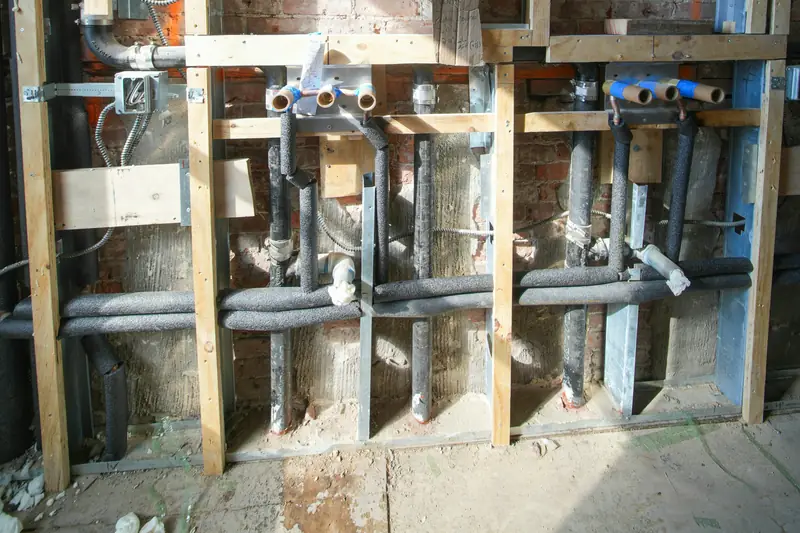
Call sheet: what this page covers
Before you scroll
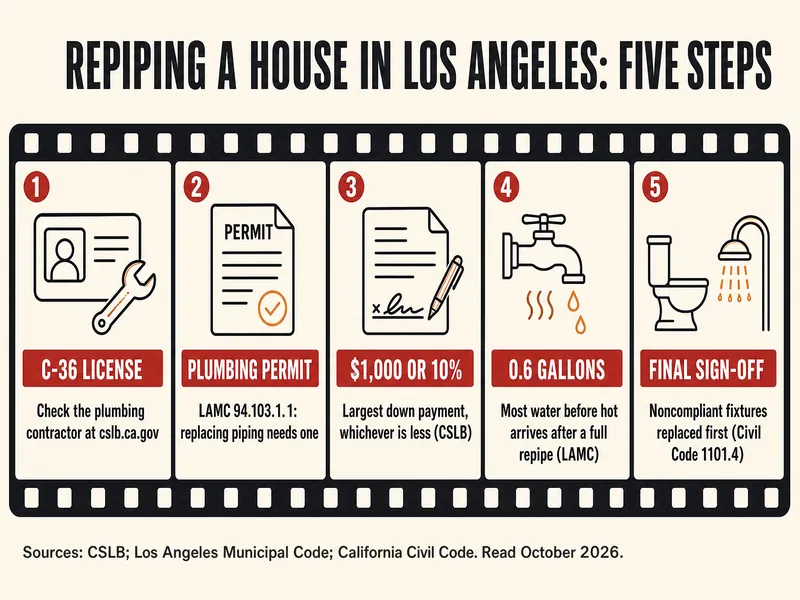
- Los Angeles requires a plumbing permit to replace plumbing (LAMC 94.103.1.1); a certified contractor may file a Certificate of Compliance instead only for limited swaps of defective piping.
- The CSLB C-36 plumbing license covers water piping from the owner's side of the utility meter.
- California requires a written contract for home improvement work over $500, and the down payment may not exceed $1,000 or 10 percent of the price, whichever is less (CSLB).
- After a full repipe in Los Angeles, no more than 0.6 gallons may reach a fixture before hot water arrives (LAMC 94.610.4.1.1, in force December 31, 2025).
- Civil Code §1101.4 requires noncompliant toilets, showerheads and faucets to be replaced before a permitted alteration gets final sign-off.
- Copper must be at least Type L, and PEX has to stay 18 inches clear of a water heater (§§604.3 and 604.13 of the 2025 state plumbing code).
When does repiping a house make sense?
Repiping a house makes sense when the supply system fails in more than one place: rust in the water at several taps, pressure that has dropped across the house, or leaks that keep appearing in the same kind of pipe. LADWP's water quality FAQ says that when old rusty pipes discolor the water, "the only permanent solution is to replace them," and that replacing only some of them can make the problem worse.
A single leak is a repair. A pattern is the usual trigger: the galvanized pipe page covers rusting steel, and the pinhole leak page covers repeat leaks in copper. Before you decide, test the house pressure at a hose bibb; pressure over 80 psi needs a regulator under the 2025 California Plumbing Code (§608.2), and new pipe will not fix that on its own. The pressure regulator page shows the test.
Do you need a permit to repipe in Los Angeles?
Yes. The Los Angeles Municipal Code says no one may "add, alter, construct, install, move, reconstruct, relocate, remove, repair or replace any plumbing" without a permit (LAMC 94.103.1.1, amlegal). A whole-house repipe is replacement, so it needs a plumbing permit from LADBS and inspections.
The narrow exception is LAMC 94.103.1.2.12. On a detached single-family home, a contractor registered as a certified licensed contractor may replace "defective domestic water piping within a dwelling" with pipe of equivalent size and quality and file a Certificate of Compliance in place of a permit. Ask which route the contractor plans to use and get the permit or certificate number in writing.
Burbank's building permits page says permits are needed even for plumbing "repair and maintenance." Glendale owners should ask the city's building department; this site did not open a Glendale permit page.
Who can legally do the repiping work?
In Los Angeles, only a "Qualified Installer" may do plumbing work: a state-licensed contractor in the right class, a Maintenance Certificate holder, or an owner who qualifies (LAMC 94.103.11, 94.219). The plumbing class is C-36, and its scope covers "water and gas piping from the property owner's side of the utility meter." Look the license up at cslb.ca.gov before you sign.
An owner may repipe a single-family home they live in if they show LADBS they are qualified, do the work before any sale, lived there 12 months before completion, and have not used the exemption on more than two structures in three years. California's minor-work exemption in Business and Professions Code §7048 does not apply: it covers jobs under $1,000 total that need no permit, and a repipe needs one.
What happens during a repipe?
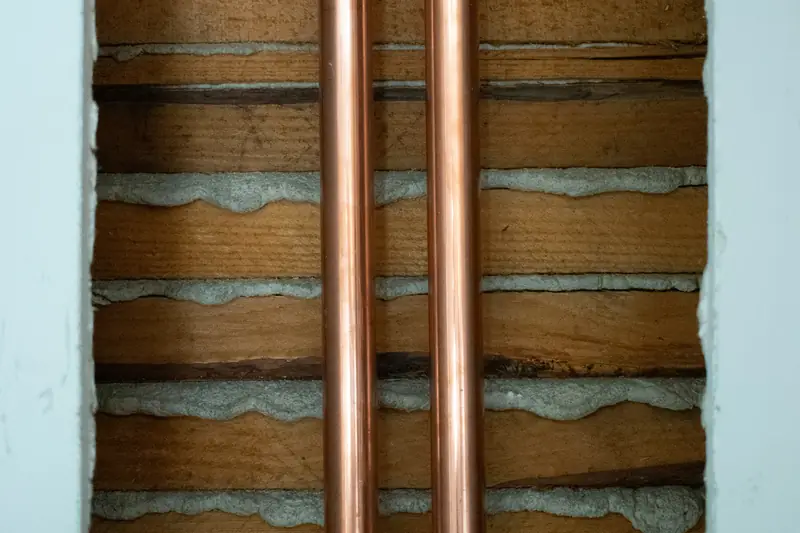
A repipe runs new supply lines from the house shutoff to every fixture, then the old lines are cut off and capped or removed. Installers open walls or ceilings at fixture locations to reach the runs, connect the new piping, and pressure-test it before the inspector signs off and the openings are patched. In a house on a concrete slab, new lines can be routed through the attic and down interior walls so the floor stays intact.
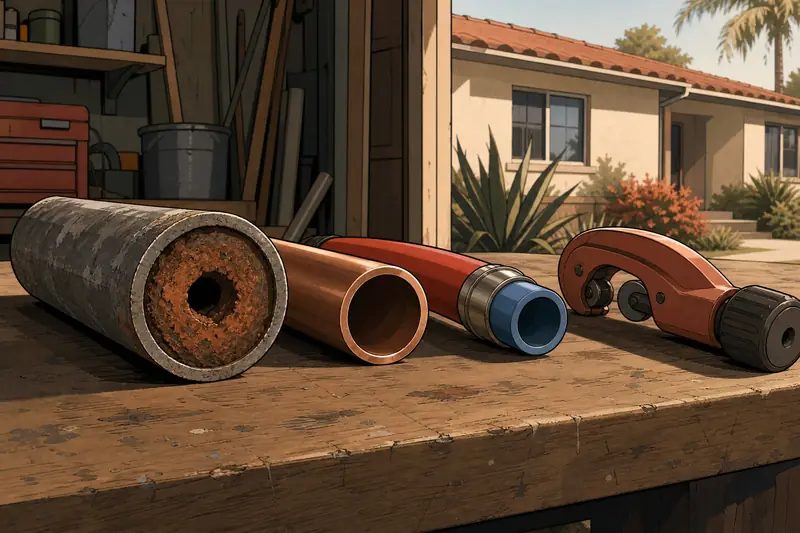
The code shapes the materials. Copper must be at least Type L, with Type M allowed aboveground inside a building (§604.3). PEX is approved statewide, though §604.13 bars it from the pipe right beside a water heater, and hot-water piping must be insulated (§609.12). In Los Angeles, a repipe that replaces all of the potable piping must get hot water to every fixture before 0.6 gallons have run (LAMC 94.610.4.1.1), which affects pipe size, routing and whether a recirculation loop is planned. The copper vs PEX page compares the two.
What should a repiping contract cover?
A repiping contract should say what pipe goes where, who pulls the permit, and when the job ends. CSLB says the contract "needs written direction as to who will get the necessary permits, and must provide a date of completion," should "describe, in detail, the products to be used," and should include cleanup and the contractor's license number (CSLB).
Payments are capped by law. The down payment "cannot be more than $1,000 or 10 percent of the contract price, whichever is less," and later payments "cannot exceed the value of the work performed." Changes need a written change order signed before the work changes. For a repipe, also ask the contract to name the pipe type and brand, the number of wall openings, whether patching and painting are included, and any written warranty.
How do you plan around a repipe?
Plan for water to be off during the cutover and for walls to stay open until the inspector sees the work. Ask the contractor how many days the water will be off and when the inspection is booked; there is no code figure for job length.
A permit can pull in other items. Civil Code §1101.4 requires all noncompliant plumbing fixtures to be replaced before final permit sign-off on a permitted alteration, and the 2025 code caps new toilets at 1.28 gallons per flush and showerheads at 1.8 gpm. LAMC 94.1216 requires a seismic or excess-flow gas valve when a residential alteration is valued over $10,000, so ask LADBS whether your repipe permit triggers it; the seismic gas valve page has the details. Check that the water heater has two straps while it is exposed (strap rules), and know where the main water shutoff is before work starts.
Repiping rules in numbers
- $500contract amount above which California requires a written home improvement contractCSLB
- $1,000 or 10%largest down payment allowed, whichever is lessCSLB
- 0.6 galmost water a fixture may deliver before hot water arrives, after a full LA repipeLAMC 94.610.4.1.1
- 12 monthshow long an owner must live in the home to use the LA owner exemptionLAMC 94.219
- $10,000alteration value that triggers LA's seismic gas valve ruleLAMC 94.1216
| Who does the work | Paperwork | Conditions |
|---|---|---|
| Licensed C-36 plumbing contractor | LADBS plumbing permit and inspections | Valid CSLB license in the right class |
| Certified licensed contractor | Certificate of Compliance instead of a permit | Detached single-family home; defective piping replaced with equal size and quality |
| Owner-occupant (Qualified Installer) | LADBS plumbing permit and inspections | Qualified to LADBS; 12 months' residence; before sale; two structures in three years at most |
| Unlicensed handyman | Not allowed | B&P §7048 exemption only covers jobs under $1,000 that need no permit |
Where this page comes from
Based on the Los Angeles Municipal Code (sections 94.103, 94.219, 94.610.4 and 94.1216 as amended by Ordinance 188,797, read on amlegal), the 2025 California Plumbing Code (IAPMO epub), California Business and Professions Code §7048, Civil Code §1101.4, CSLB's C-36 classification and home improvement contract pages, Burbank's building permits page and LADWP's water quality FAQ, all read in October 2026. LADBS pages could not be loaded, so permit steps come from the code itself. Left out: repiping prices, permit fees and job durations, which had no primary source.
Still asking
How long does a Los Angeles repipe permit take to get?
This site could not load LADBS pages, so it has no processing time to quote. Ask the contractor which permit route they use and when the first inspection is booked.
Can a repipe be done without opening walls?
Some openings are needed at fixtures and along runs, because new pipe has to be connected and inspected. Ask the contractor for the number and size of openings in the contract.
Does a repipe include the line from the meter to the house?
Only if the contract says so. LADWP owns the meter and everything on the street side; the owner's yard line between meter and house can be included or left out.
Is PEX allowed for a full repipe in Los Angeles?
Yes. California approved PEX statewide in 2010, and the 2025 plumbing code lists it for water distribution, with limits near water heaters and in soil.
Who pays to patch the walls after a repipe?
Whoever the contract names. CSLB advises putting cleanup and debris removal in the contract, and the same goes for patching and paint.
Can a tenant be charged for a repipe?
This site found no rule on passing repiping costs to tenants. Check your lease and the city's housing department for rent-stabilized units.
Does a repipe change the home's water heater?
Not necessarily, but the code limits what may connect to it: no PEX in the 18 inches nearest the heater, and copper or stainless flexible connectors may be no longer than 24 inches.
That is the end of this page. Back to every Valley water and plumbing page.