Folder 05 · 4 pages
Quake-Ready Plumbing for Valley Homes
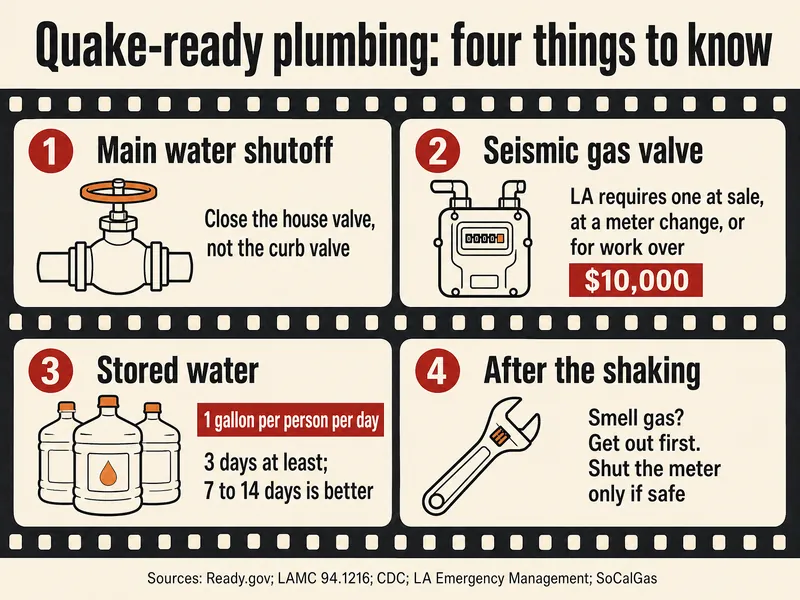
Quake-ready plumbing for a Valley home means four things done ahead: a house water shutoff you can close, a strapped water heater, a gas plan, and at least 3 days of stored water per person.
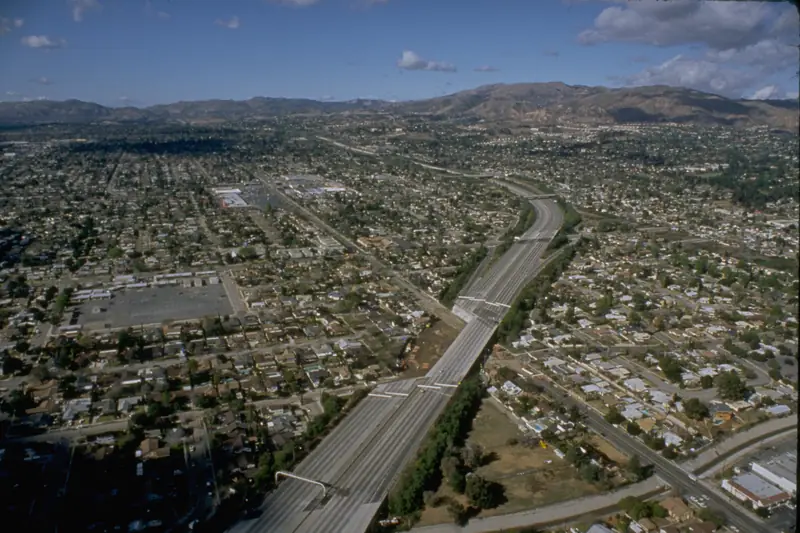
Before you scroll
- The 1994 Northridge earthquake (magnitude 6.7, January 17, 1994) shook the ground hard for 10 to 20 seconds, according to the USGS.
- LADWP counted about 1,400 water system leaks after Northridge, and about 151,000 gas customers lost service, 81 percent of them by their own shutoff (NIST-GCR-98-743).
- Ready.gov says to close the main house valve after a quake, not the street valve in the curb box, which "requires a special tool."
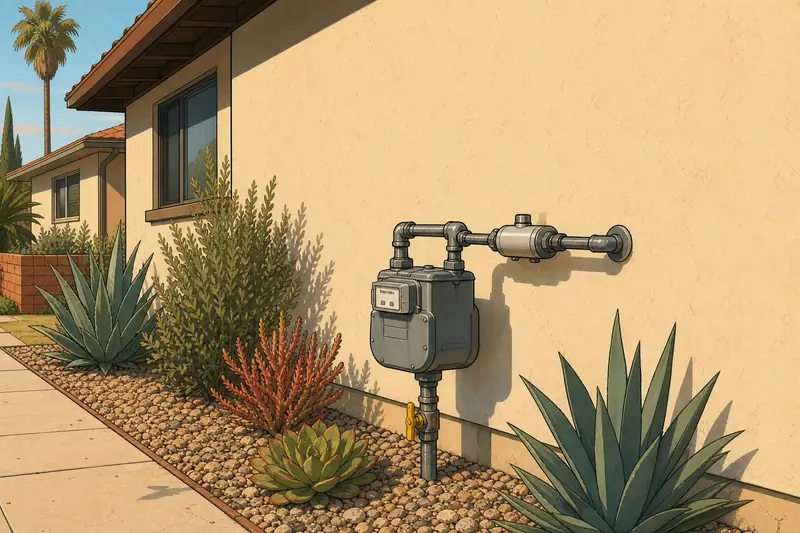
- Los Angeles requires a seismic or excess flow gas shutoff valve before a sale, for permitted residential work valued over $10,000, and when the gas meter is altered or replaced (LAMC 94.1216).
- CDC asks for at least 1 gallon of water per person per day for 3 days; LA Emergency Management's checklist says up to 7 days.
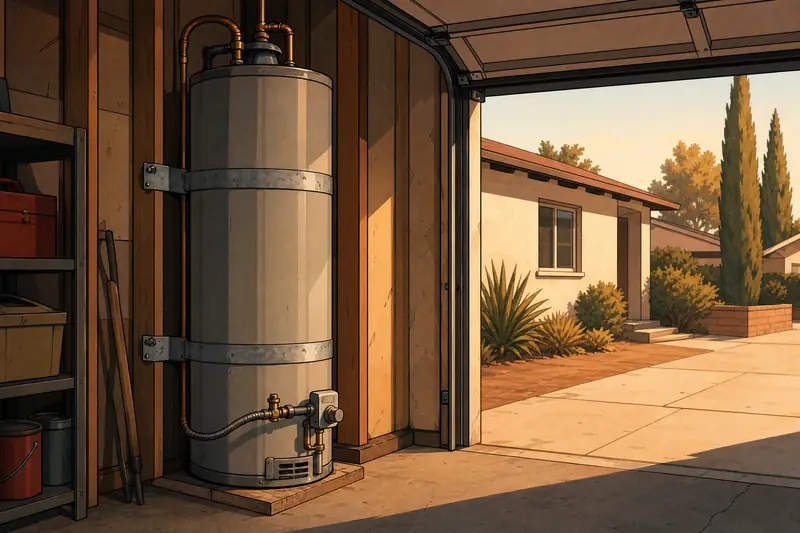
- California Health and Safety Code § 19211 requires every residential water heater up to 120 gallons to be braced, anchored or strapped.
This folder is about the pipes, valves and tanks that matter in the minutes and days after a San Fernando Valley earthquake. Shutoff Valley is a reading site, not a plumbing company or a public agency, so each answer points to the code section or agency page behind it.
Quake numbers worth knowing
- 6.7magnitude of the January 17, 1994 Northridge earthquakeUSGS Open-File Report 96-263
- 1,400leaks in the water system after Northridge, per LADWP's estimateNIST-GCR-98-743
- $10,000permitted residential work above this value triggers a gas shutoff valve in LALAMC 94.1216
- 40 gallonsusable water a typical restrained water heater holdsFEMA P-530
Where is your main water shutoff?
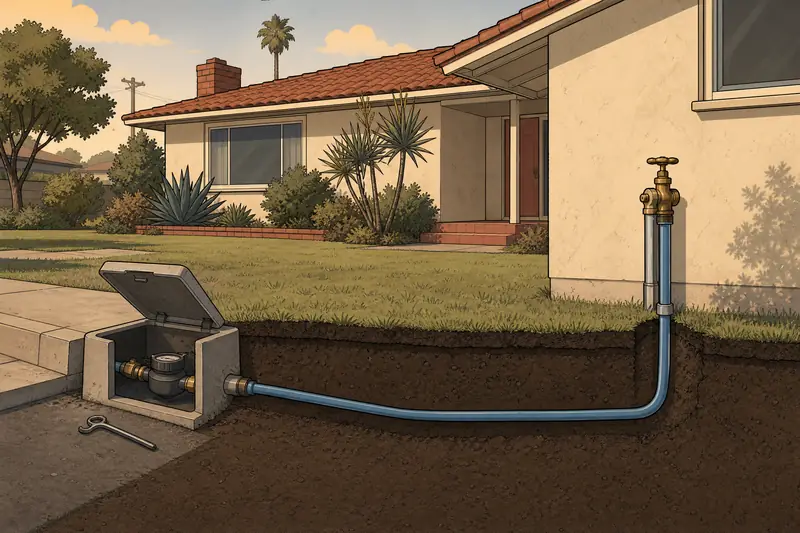
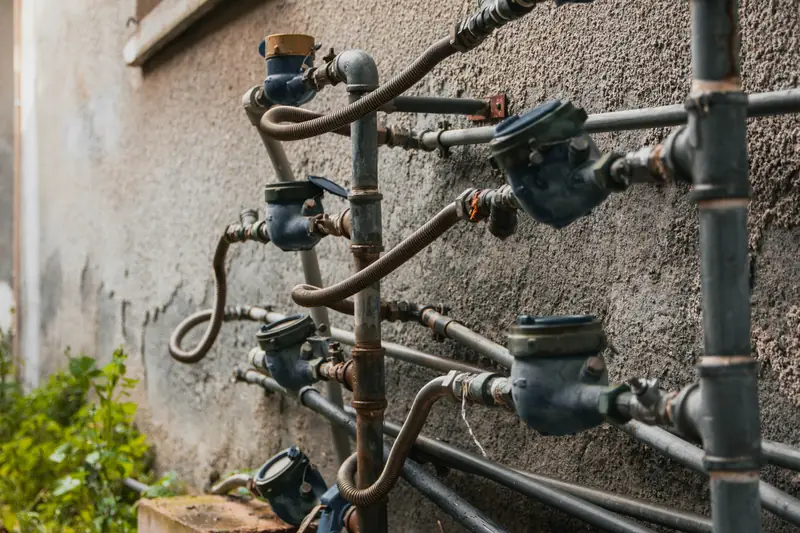
On most Valley houses the main water shutoff is a valve on the line where it rises out of the ground at the front or side wall, between the curb meter and the house. LADWP's responsibility stops at the meter, according to the LADWP water service guide, so the house valve is yours to find, tag and test.
Closing it after a quake keeps clean water trapped in the water heater and toilet tanks, and Ready.gov adds that cracked lines "may pollute the water supply to your house." Leave the curb valve in the meter box to LADWP.
Does Los Angeles require a seismic gas shutoff valve?
Yes, in four situations: new buildings with gas piping permitted since September 1, 1995; permitted residential alterations valued over $10,000 (permits first issued on or after January 10, 1998); work that alters or replaces the gas meter; and before a sale or close of escrow (LAMC 94.1216, Ordinance 188,797, effective December 31, 2025). The valve goes on the house line, never on the utility's meter set.
No Burbank or Glendale ordinance on these valves was found for this page, so owners there should ask their city building department.
How much water should you store?
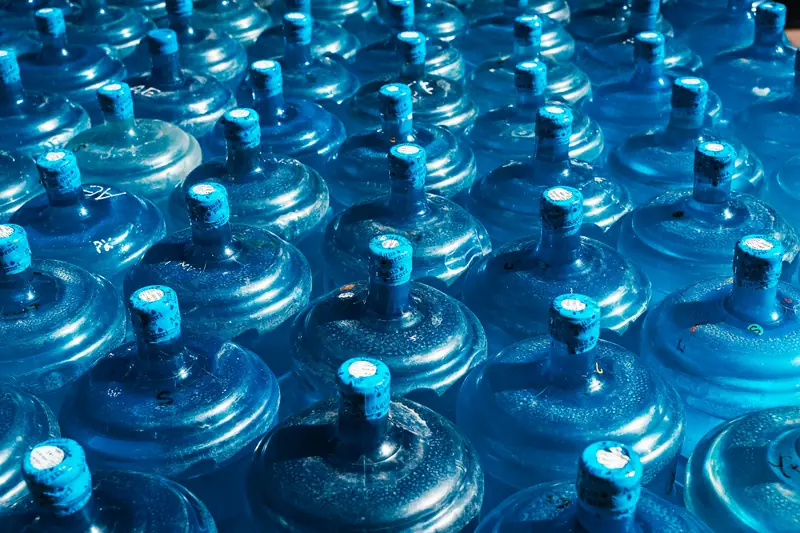
Store at least 1 gallon per person per day: the CDC sets 3 days as the floor and suggests 2 weeks if you can, while LA Emergency Management's kit checklist plans for up to 7 days and counts pets the same way. A household of four storing for 7 days needs 28 gallons.
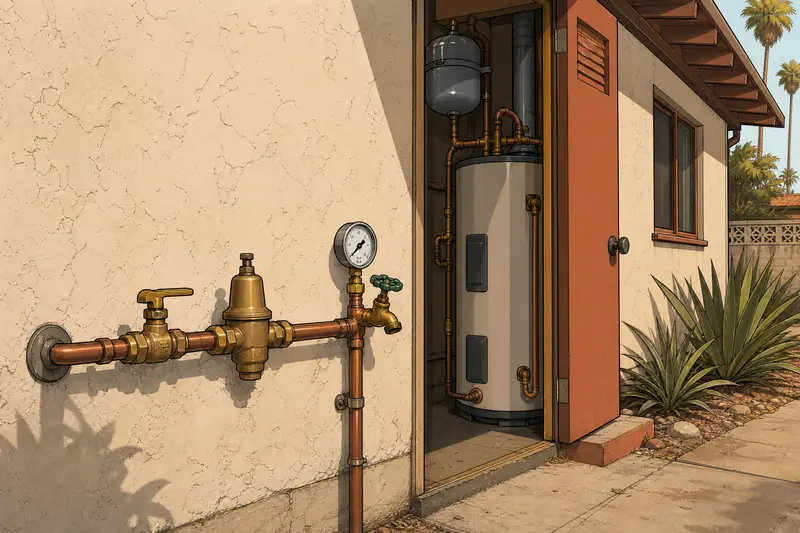
A strapped, undamaged water heater is a second reserve. FEMA P-530 puts the usable volume of a typical tank at about 40 gallons.
What should you check after an earthquake?
Check for gas first, then the water heater, then leaks, and only then the drains. The meter valve is for a real leak only, by SoCalGas's rule, and once it is closed the utility alone reopens it.
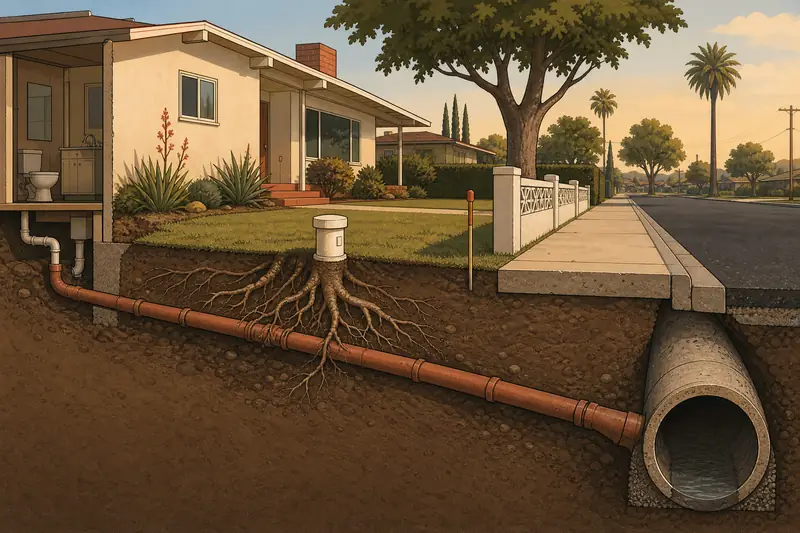
After that, look at the water heater's straps and connections, read the water meter with every tap off, and wait for word that the street sewers work before flushing.
What did the 1994 Northridge earthquake teach about plumbing?
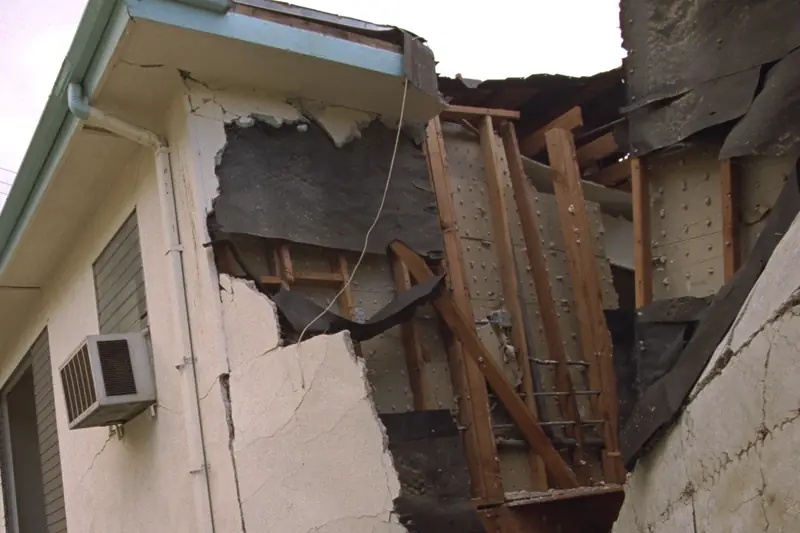
Northridge showed that broken water mains and gas lines, not just fallen walls, shape the days after a quake. NIST's fire report counted about 110 earthquake-related fires, about 1,400 water system leaks and no hydrant pressure in much of the west and north Valley, where firefighters drafted water from tankers and backyard pools.
Of roughly 8,000 seismic gas valves in the region, about 841 closed, and 162 of the closed valves turned out to be on properties with a gas leak. A separate 1994 NIST field report tied loose, unstrapped water heaters to gas leaks in California quakes.
| Topic | Rule or guidance | Who says so |
|---|---|---|
| Main water shutoff | Close the house valve, not the curb valve | Ready.gov Safety Skills |
| Water heater bracing | Brace, anchor or strap all residential heaters up to 120 gallons | Cal. Health and Safety Code § 19211 |
| Strap position | Upper third and lower third, lower strap at least 4 inches above controls | 2025 California Plumbing Code § 507.2 |
| Seismic gas valve | Required at sale, meter change and work over $10,000 | LAMC 94.1216 (Los Angeles only) |
| Stored water | 1 gallon per person per day, 3 days minimum | CDC; LA Emergency Management (up to 7 days) |
Where this page comes from
This folder page draws on the USGS Northridge report (Open-File Report 96-263), two NIST Northridge reports (1994 and 1998), LAMC 94.1216 (Ordinance 188,797), the state water heater bracing law (§ 19211), the 2025 plumbing code, FEMA P-530 (2020), Ready.gov, the CDC's 2025 water emergency pages and LA Emergency Management's kit checklist, all read in October 2026. SoCalGas content came from saved copies of its pages, since its live site refused automated reading. Left out: shaking forecasts, insurance advice, and any count of toppled water heaters, since no primary source gave one.
Still asking
Is quake-ready plumbing a permit job?
Some of it is. Tagging a valve or storing water involves no city office, but installing a seismic gas shutoff valve in Los Angeles needs a permit and an inspection, and LAMC 94.1216 says a licensed contractor installs it unless a qualifying owner does it on an owner-occupied single-family house.
Does a seismic gas valve replace knowing how to shut off the meter?
No. The house valve closes on strong shaking, but you still need a 12-inch or larger adjustable wrench near the meter for a leak it does not catch. SoCalGas says to keep the wrench with your emergency supplies or beside the valve, not stored on the meter piping.
Do renters need to do any of this?
California's bracing law applies to all residential water heaters, and an owner may not evict a tenant to comply with it (Health and Safety Code § 19211). Renters can still store water, learn where the shutoffs are, and ask the owner before touching gas fittings.
Should the swimming pool count as emergency water?
Only for washing and flushing. The CDC says water from pools and spas can be used for hygiene and cleaning but not for drinking.
What about Burbank, Glendale and San Fernando?
State rules on water heater bracing and water storage apply everywhere in the Valley. The Los Angeles gas valve ordinance does not, and no matching Burbank or Glendale ordinance was found, so ask your own building department.
Does homeowners insurance pay for quake plumbing damage?
Ready.gov notes that a standard homeowners policy does not cover earthquake damage; a separate earthquake policy does. Read your own policy for what it says about pipes.
That is the end of this page. Back to the Shutoff Valley front page.